

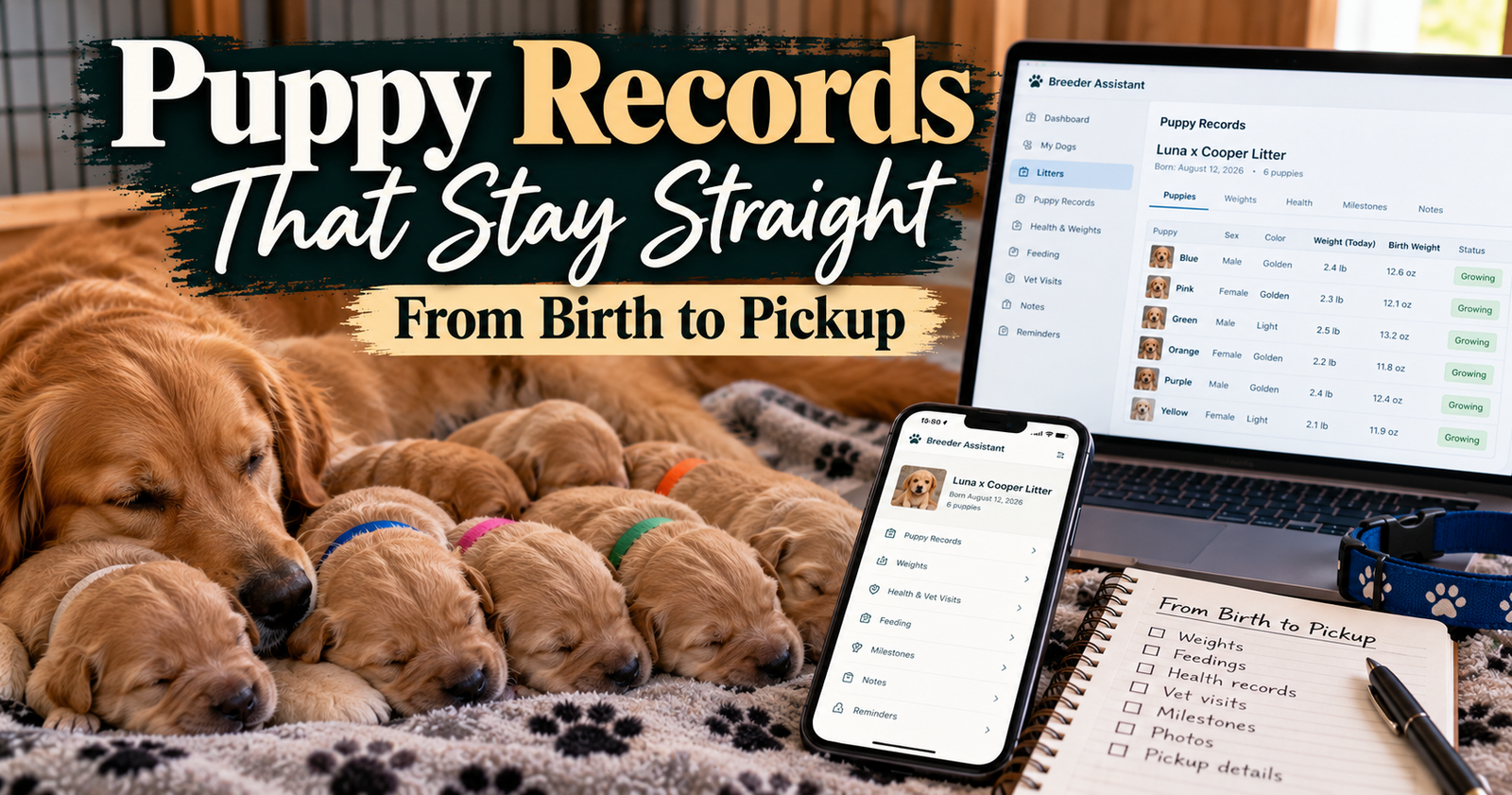
Good puppy records should tell you which puppy you’re looking at, what care it has received, and what needs to happen next. Start with a clear identity linked to the litter, then keep its weights, veterinary paperwork, care notes, and eventual new-owner details connected to that same puppy. For guidance on keeping vaccine dates and supporting documents together, see dog vaccination records.
That sounds simple until several puppies look alike, someone changes a name, and a pickup date moves.
I’m a licensed breeder with 14 dogs total and many years of experience. My advice is to organize records so they still make sense when you’re tired or someone else needs to understand them.
“Little boy had his checkup” might make sense today.
A puppy number, appointment date, and the actual veterinary record will make sense months from now.
Give Each Puppy an Identity Before Giving It a Name
Names can change.
A puppy might begin as “blue boy,” get a temporary name, and receive another name from its new family.
The record needs a consistent identity underneath all of that.
Choose a Puppy Name/Number
Use a number that stays with the puppy throughout your records.
If numbers repeat between litters, include the litter identity too.
“Puppy 2” isn’t enough when you have several litters in your history.
Add a Clear Description
Record sex, color, and distinguishing markings.
Be specific where it helps. “White mark on chest” is more useful than “cute little one.”
Photos can support identification, but keep the written details clear too.
Keep Official Numbers Separate
A microchip number, registry number, and your own puppy number serve different purposes.
Don’t put all three in one unlabeled field.
The easier they are to distinguish, the less likely you are to copy the wrong number onto paperwork.
Start With the Litter, Then Add the Individuals
Some information belongs to every puppy in the litter.
Other details belong to only one.
A useful system lets you see both without blending them together.
The Shared Litter Record
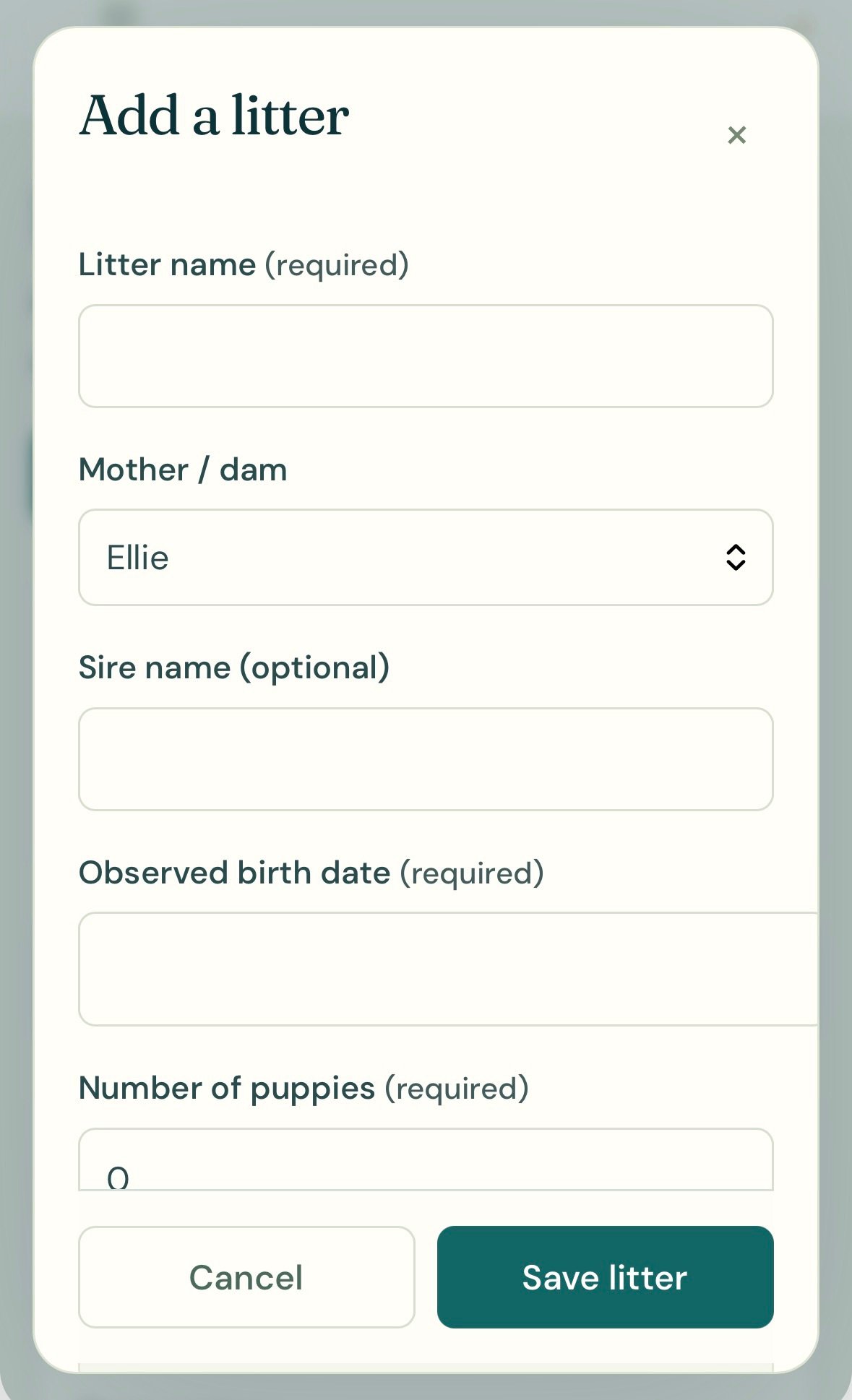
Begin with the actual birth date, dam, sire if known, and litter identification.
Record the puppy count accurately. If circumstances change, preserve what the original count represented rather than quietly changing its meaning.
The Individual Puppy Record
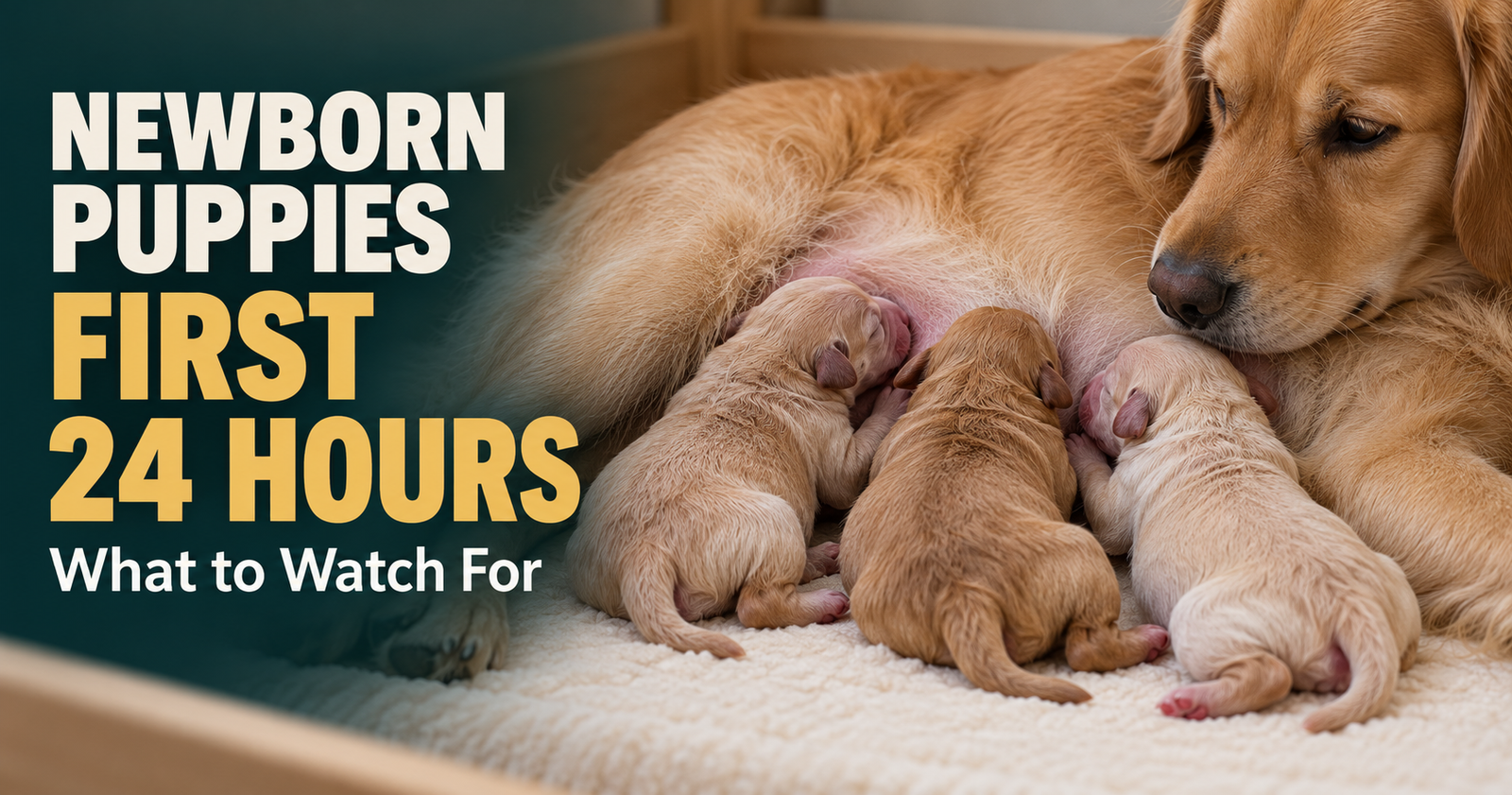
Each puppy needs its own identity, observations, care history, and eventual placement details.
One puppy’s follow-up appointment shouldn’t disappear inside a general litter note.
Don’t Guess at Missing History
An unexpected litter may come with unknown dates or parentage.
Leave those details unknown or clearly qualified.
A blank field is better than a confident-looking guess that later gets repeated as fact.
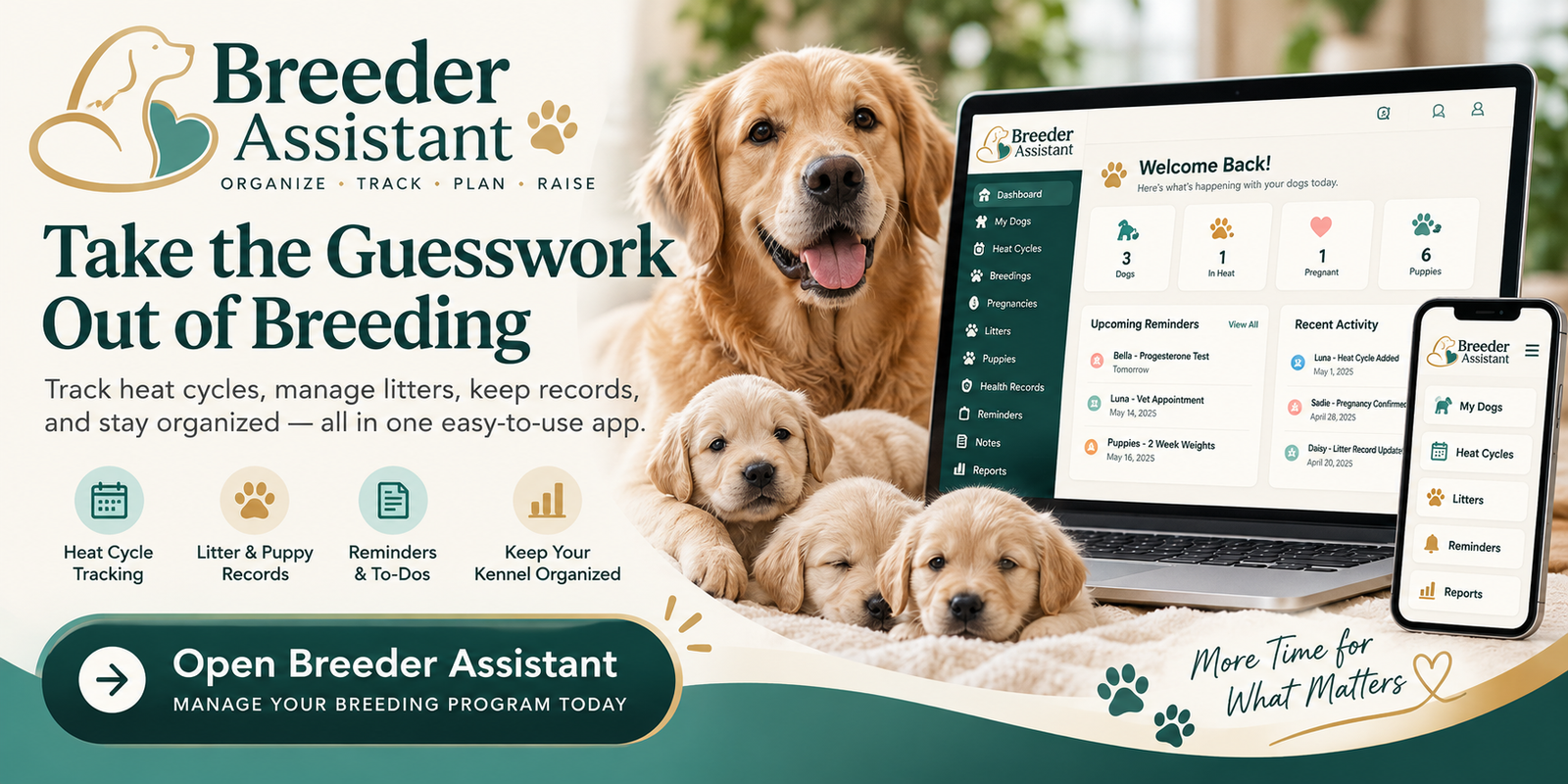
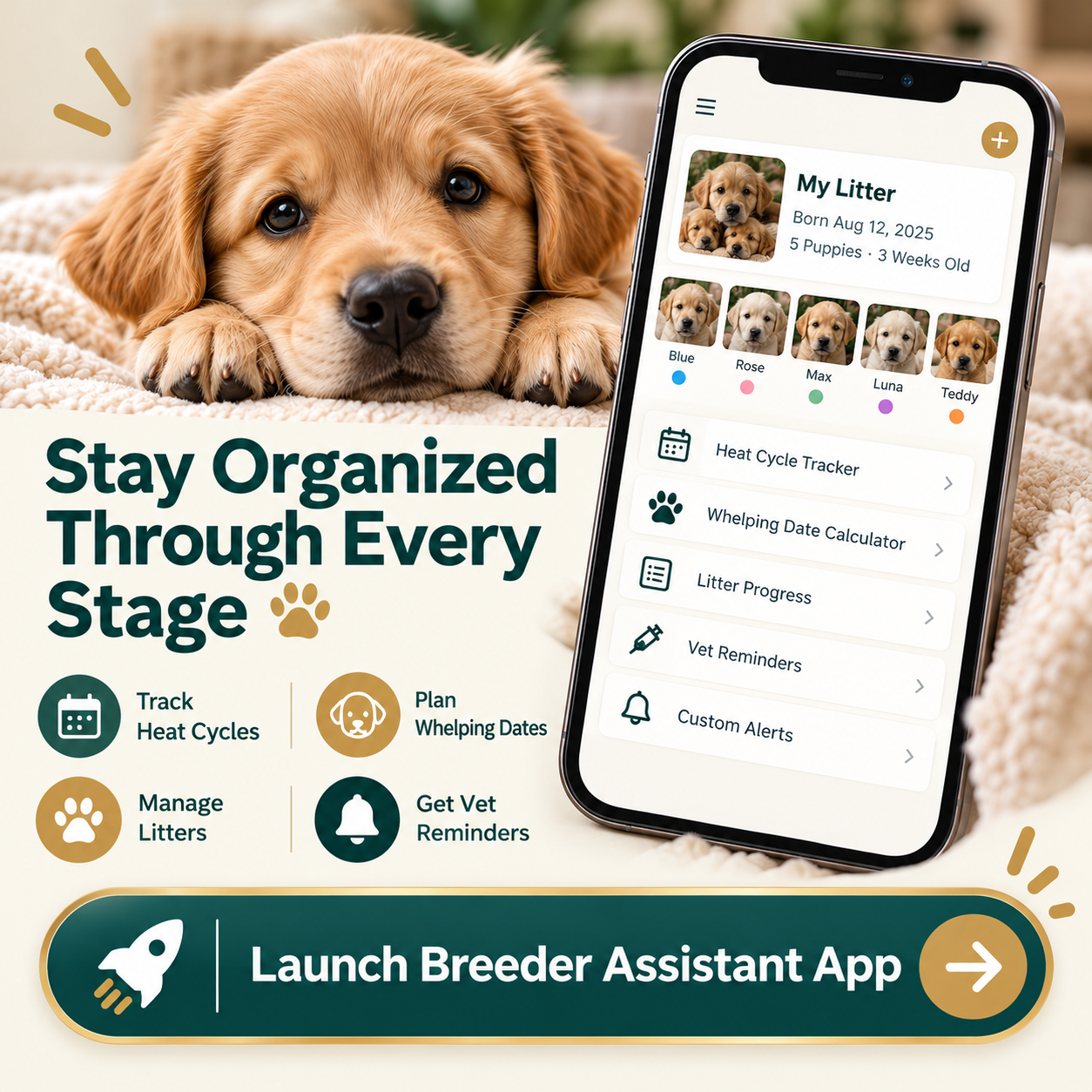
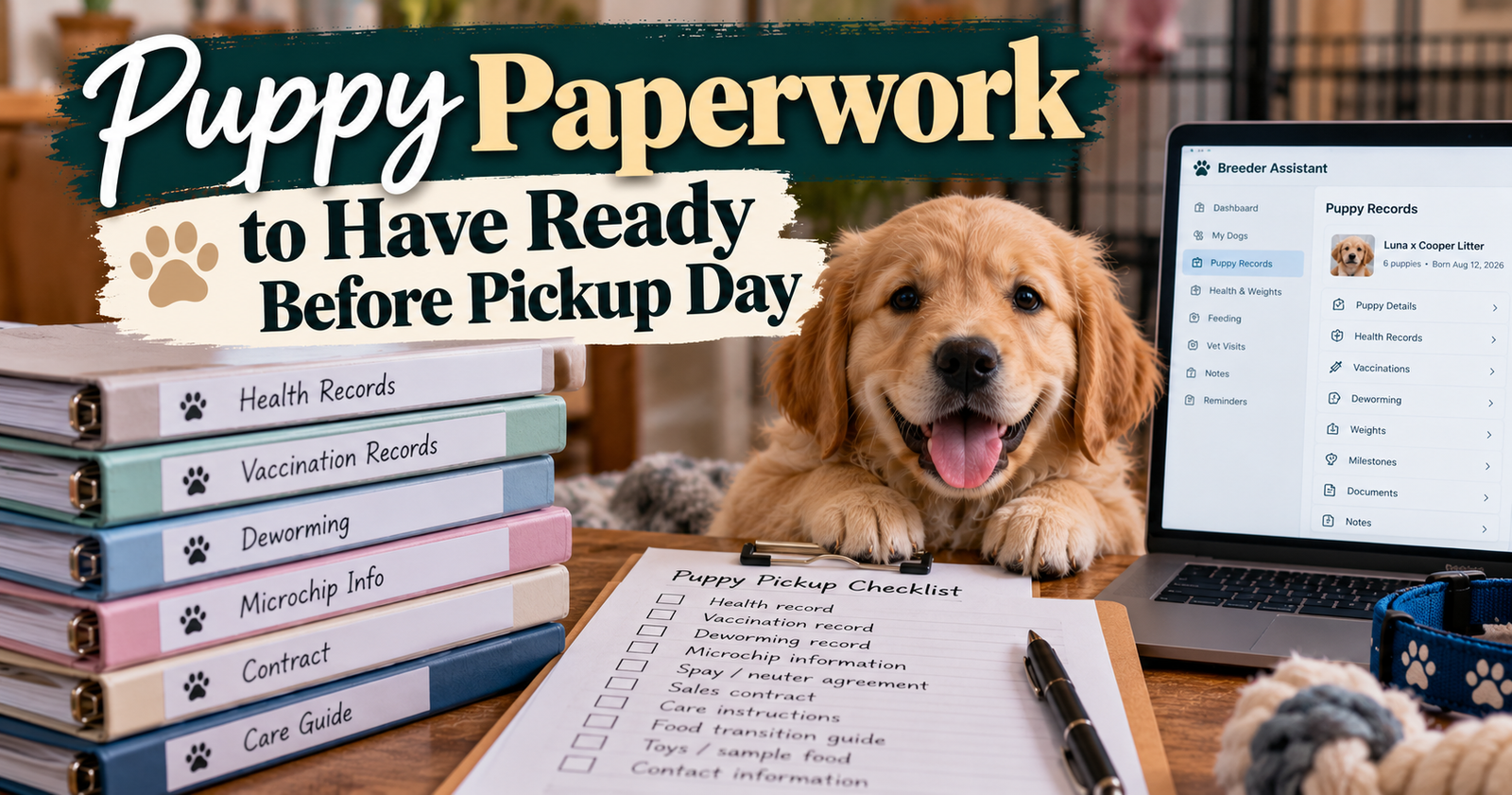
In Breeder Assistant, each puppy belongs to its litter, with its own number, identifying details, notes, appointments, and go-home information. That gives you a starting structure without building the connections yourself.
Record Care That Happened, Not Just Care You Planned
This is one of the most useful distinctions in recordkeeping.
An appointment on the calendar shows what was scheduled.
It doesn’t prove the puppy attended or tell you what the veterinarian found.
Keep the Appointment
Record the date, purpose, and preparation details.
That helps you get there ready.
Keep the Outcome
After the visit, retain the actual veterinary paperwork and note any follow-up instructions.
Don’t replace the clinic’s findings with “all good” if there were details the new owner or another veterinarian should know.
Keep Future Instructions Separate
If the vet recommends another visit, create the next appointment or reminder.
The medical record explains the recommendation. The reminder helps you act on it.
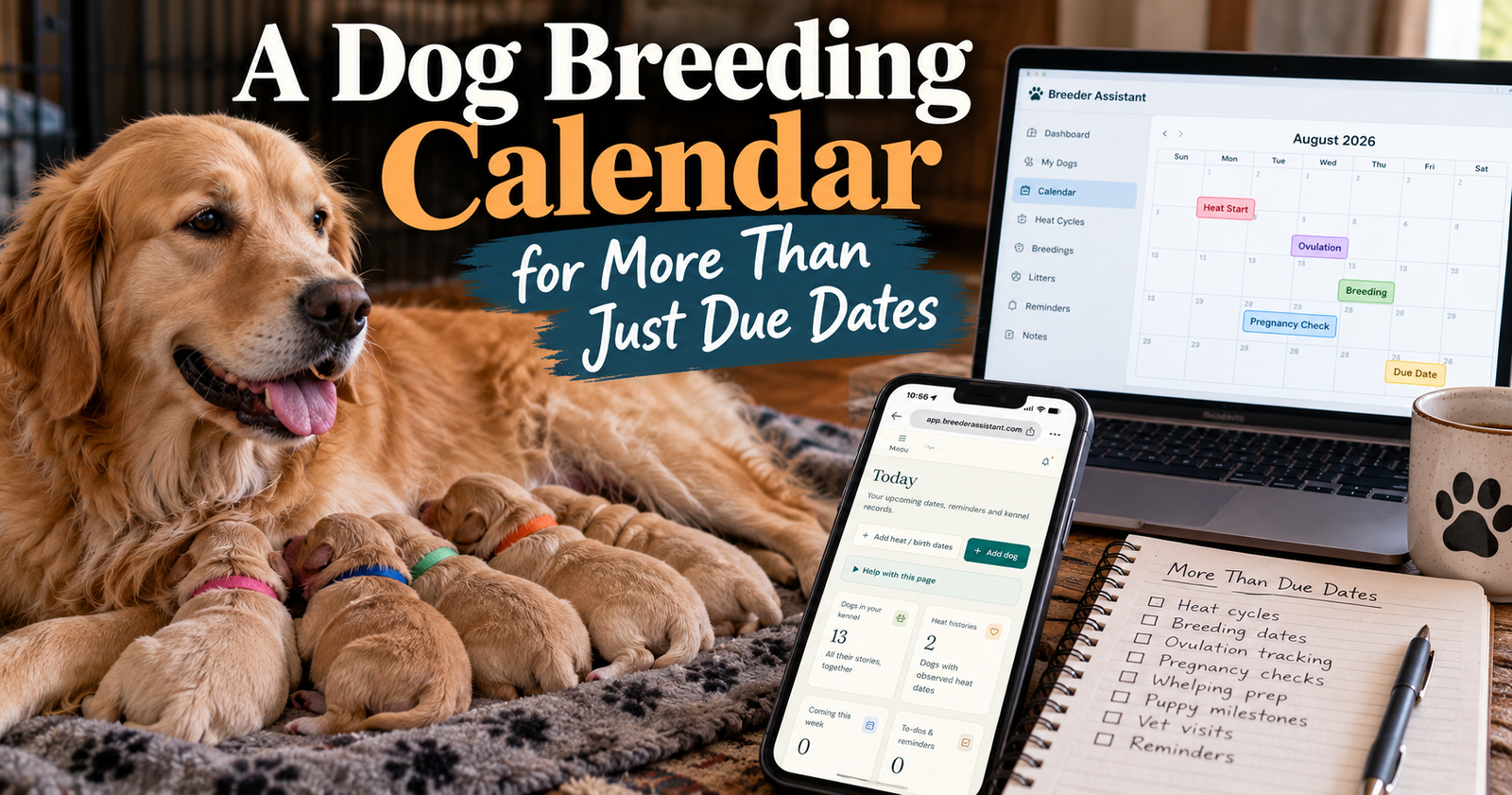
Our dog breeding calendar guide explains how to keep upcoming tasks connected to the right dogs and puppies.
Make Health Records Specific Enough to Use
“Shots done” leaves too many questions.
Someone reviewing that record may need to know the product, date, and who administered it.
Use the information actually supplied by the veterinarian or product documentation rather than trying to reconstruct it later.
Vaccinations
Preserve the vaccination record and relevant product details.
Don’t label a puppy “fully vaccinated” simply because it received one injection.
Keep the next recommended step clear.
Medications and Parasite Treatments
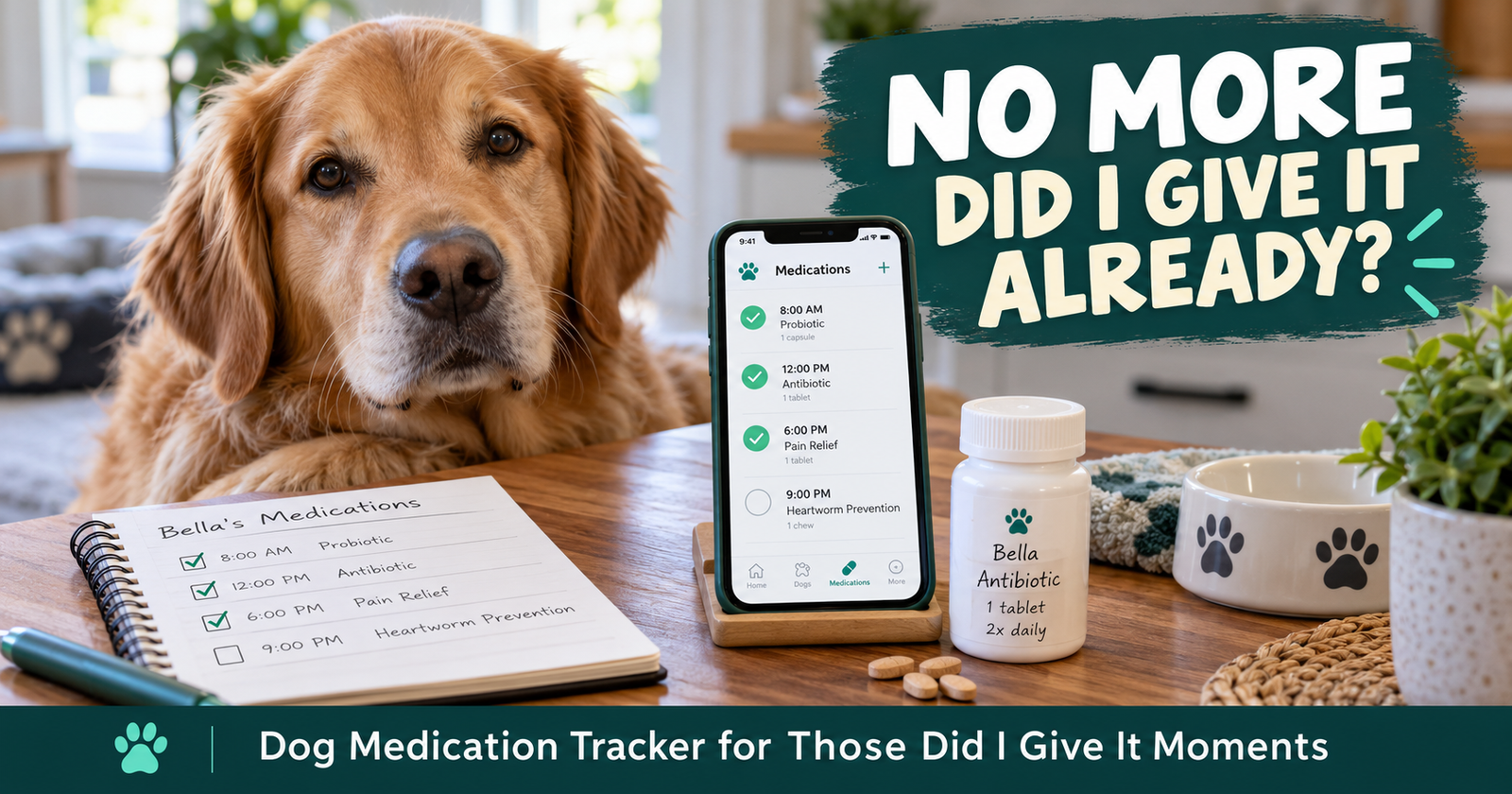
Record the product, date, amount administered, and instructions from the prescribing veterinarian where applicable. For a more detailed approach to dose-by-dose notes, recording medication details explains how to preserve medication instructions and completed-care records.
Keep concentration and measurement units clear.
A note saying “gave 1” is incomplete.
Examinations and Test Results
Retain actual results.
Separate a test that was recommended, a sample that was collected, and a result that was received.
Those are different stages, even when they concern the same appointment.
Don’t Turn This Into a Homemade Medical Schedule
A recordkeeping system helps document care.
It doesn’t decide which treatment a puppy needs.
Use your veterinarian’s plan, then record what was actually done.
Keep Weights Attached to the Right Puppy
A weight log is only useful if the identity stays correct.
Weighing two similar puppies and recording both under the same number creates a misleading history.
Use Consistent Units
Grams, ounces, and pounds shouldn’t appear interchangeably without clear labels.
Include dates and times so you know the interval between measurements.
Write the Number Down Immediately
Don’t weigh several puppies and try to remember which result belonged to which one.
Record one, return that puppy safely, and move to the next.
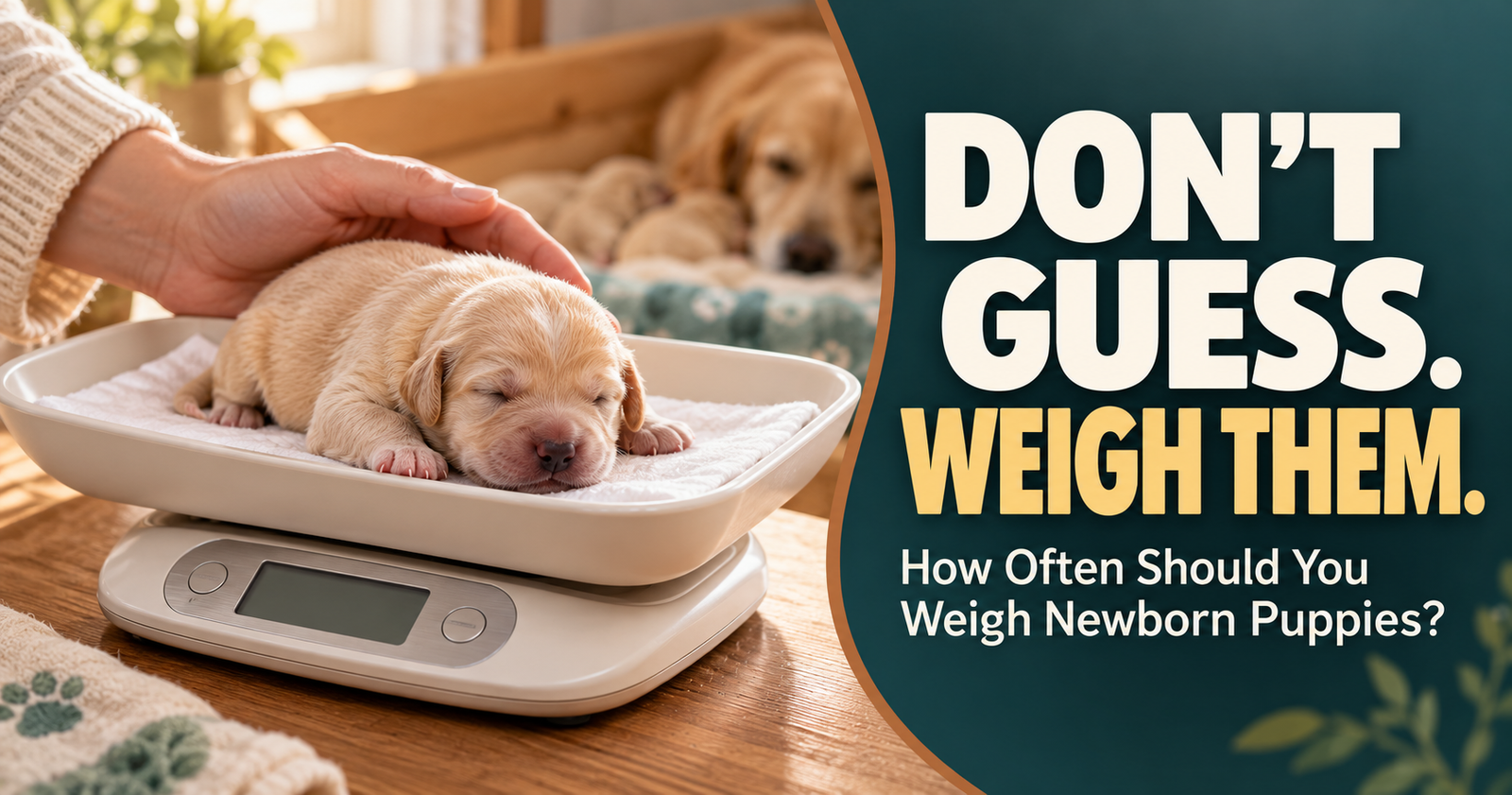
My puppy weighing guide covers a practical routine and how to interpret measurements alongside the puppy’s condition.
Keep the Notes That Explain a Change
A brief observation such as “needed help latching this morning” can add context.
Avoid recording an assumption as a diagnosis.
“Didn’t nurse during this check” is an observation. “Mother has no milk” is a much bigger claim.
Write Notes Someone Else Could Understand
You don’t need long entries.
You need useful ones.
A Vague Note
“Small one acting different.”
That doesn’t identify the puppy, describe the change, or establish when it happened.
A More Useful Note
Here’s a hypothetical example:
“Litter A, Puppy 3. At 8 a.m., searched for a nipple but didn’t stay attached. Called the clinic and recorded their instructions separately.”
That gives you an identity, time, observation, and action.
Add Updates Instead of Erasing the Story
If the puppy improves, record the update.
If you entered a number incorrectly, correct it clearly.
The goal is an understandable history, not a record that looks as though nothing ever needed attention.
Don’t Mix Up the Families
Buyer information needs the same care as puppy information.
A conversation about one puppy can change when a family chooses another.
Make sure the record follows the final decision.
Connect the Family to the Correct Puppy
Record the owner’s name and contact information against the individual puppy.
Confirm which puppy they are taking before preparing the handoff documents.
Check Contact Details
A mistyped email address or phone number creates avoidable work later.
Confirm the details directly rather than copying an old message without checking it.
Protect Private Information
Buyer contact details don’t belong in public screenshots, social posts, or example records.
Use fictional details when demonstrating your system.
Keep Planned Pickup and Actual Departure Separate
Plans change.
A family may reschedule, or the puppy may need to stay longer.
The record should show what happened.
Planned Go-Home Date
This helps organize preparation.
It is a scheduling entry, not proof the puppy is ready or legally eligible to leave.
Actual Go-Home Date
Record the date the puppy really leaves.
Don’t leave the planned date standing in for the actual event.
Status
Keep the puppy’s status current as arrangements change.
Breeder Assistant includes statuses such as available, reserved, in a new home, and staying with us.
It also separates planned and actual go-home dates. Recording the actual departure stops the planned go-home reminder.
Prepare the Puppy’s Information Before Pickup Day
Pickup shouldn’t be the moment you discover the paperwork belongs to the wrong puppy.
Prepare the information early enough to check it.
Confirm the Identity
Match the puppy, its record, and any microchip or registration details.
Use a careful check rather than assuming the name alone is enough.
Gather Health Documentation
Provide accurate veterinary and vaccination records, relevant results, and current care instructions.
AKC’s breeder guidance also recommends supplying feeding information and applicable agreements or guarantees to new owners.
Write Down the Current Food
Include the exact formula and current feeding routine.
“Puppy food” won’t help a family distinguish between several products from the same brand.
Identify Follow-Up Work
Separate completed care from the next appointment or recommendation.
Give the family the information it needs to continue the puppy’s care without guessing.
Where Breeder Assistant Fits
Paper records can work.
So can a spreadsheet and organized folders.
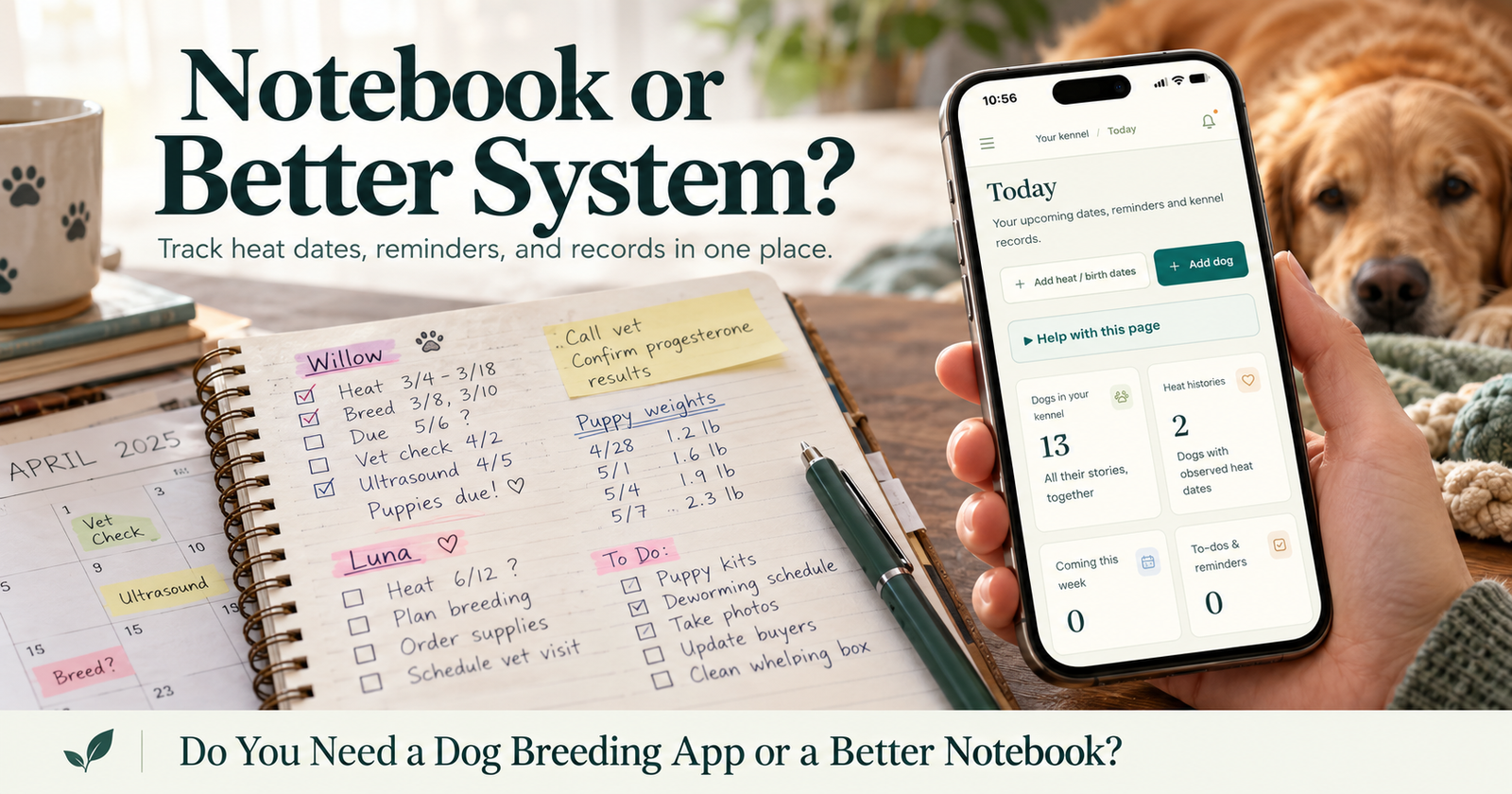
The difficulty is keeping the puppy’s identity, litter information, notes, buyer details, and next dates connected as the litter grows. If those connections are becoming difficult to maintain, connecting breeder records can help you assess whether your current recordkeeping method is still practical.
Start With the Litter
Add the birth record and then the individual puppies.
Each puppy has a number, optional name, sex, markings, and fields for relevant identification details.
Add the Details You Use
Keep notes, buyer contact information, and planned or actual go-home dates with that puppy.
Add related appointments and reminders.
Use the Same Identity Everywhere
If you maintain a separate weight log or receive a veterinary document, use that puppy number consistently.
Organize your next litter in Breeder Assistant by starting with the puppies you’re currently raising. You can build useful records without first entering every litter you’ve ever had.
A Quick Record Check Before the Puppy Leaves
Take a few minutes to compare the record with the actual handoff.
Does the Identification Match?
Check the puppy number, description, and any official identifiers.
Is the Care History Accurate?
Make sure planned treatments haven’t been listed as completed.
Keep original veterinary documentation where it is needed.
Are the Family’s Details Current?
Confirm contact information and which puppy they are receiving.
Are the Dates Correct?
Update the actual departure and any changed appointments.
Did You Keep a Copy?
Keep an organized copy of what was supplied.
Check any record-retention requirements that apply to your location, licensing, registry, or agreements. An organizational guide isn’t a complete compliance checklist.
Questions About Puppy Records
Do puppies without registration papers still need records?
Yes. Identity, birth date, care history, feeding information, and placement details remain useful whether a puppy is registered, mixed-breed, or part of an unexpected litter.
Can I use collar colors instead of numbers?
A collar color can help identify a puppy, but colors can be changed or reused between litters. Pair it with a consistent litter and puppy identity. Any collar or identification method also needs to be appropriate and safely monitored.
Should each puppy have a separate record?
Yes. Shared litter information provides background, but individual puppies can have different appointments, observations, treatments, and new owners.
Does marking a reminder complete document the treatment?
Not by itself. Completion shows the task was checked off. Record the actual care details and retain the supporting veterinary paperwork where applicable.
What if the new owner changes the puppy’s name?
Keep the original puppy identity and update or note the new name. The puppy’s history should remain understandable even after its everyday name changes.
Can I start after the puppies are already several weeks old?
Yes. Begin with accurate information you have now. Add reliable earlier documentation, label uncertain details clearly, and leave unknown information unknown.
Written by Breeder Assistant, sharing practical guidance from a licensed dog breeder with many years of experience and 14 dogs total in a small breeding program.