

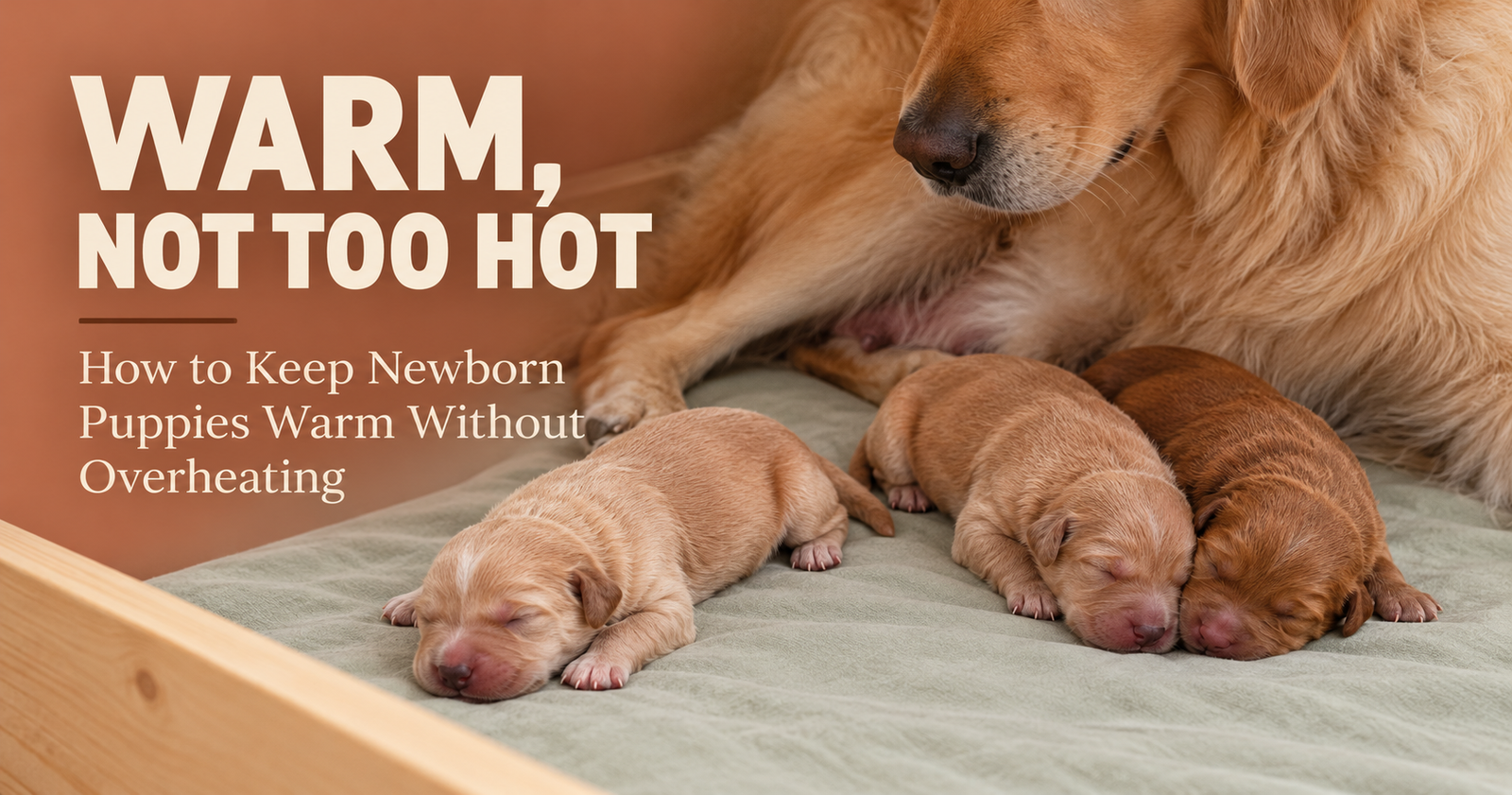
Keeping newborn puppies warm starts with a dry, draft-free space, safe supplemental heat when needed, and regular checks where the puppies actually lie. Their mother provides warmth, but you still need to make sure no puppy gets separated, chilled, or trapped.
From my experience as a licensed breeder, warmth is one of the biggest priorities with a newborn litter. Puppies can get cold and go downhill quickly. Once they become weak, they may stop nursing properly, which makes the situation worse. Because weakness and poor nursing can reinforce each other, monitoring whether puppies are nursing effectively offers a practical way to watch feeding, settling, and weight together.
I have 14 dogs total and many years of breeding experience. My advice is to keep the setup simple enough to monitor and pay attention to the puppies themselves.
You want comfortable, fed puppies that settle quietly. You also want a mother who can rest with them without becoming overheated.
Why Newborn Puppies Need Help Staying Warm
A newborn puppy cannot regulate its body temperature like an adult dog.
It depends on its mother, littermates, and surroundings to help maintain an appropriate temperature. Orphaned puppies need especially careful environmental support because they don’t have their mother’s warmth.
That means a room that feels fine to you may still leave a puppy too cold.
Getting Cold Can Affect Feeding
A chilled puppy can lose strength and have trouble sucking.
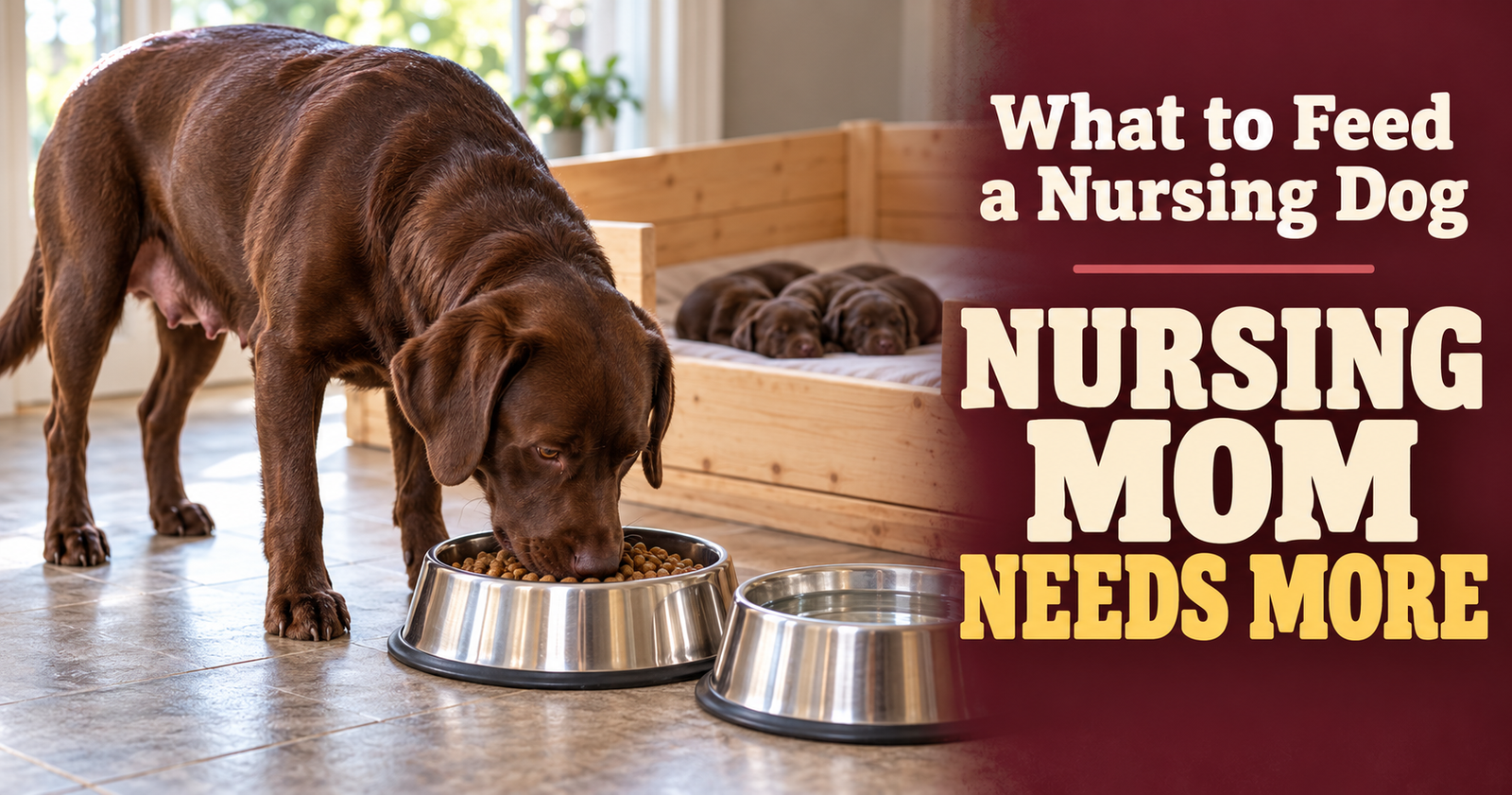
Then it takes in less milk, leaving it with less energy. That is one reason I don’t treat feeding and warmth as separate jobs. The mother’s diet also matters, so review nursing dog nutrition alongside the litter’s warmth and feeding routine.
The puppy needs to stay warm between meals, too. Veterinary neonatal guidance identifies poor sucking and weakness as consequences of hypothermia.
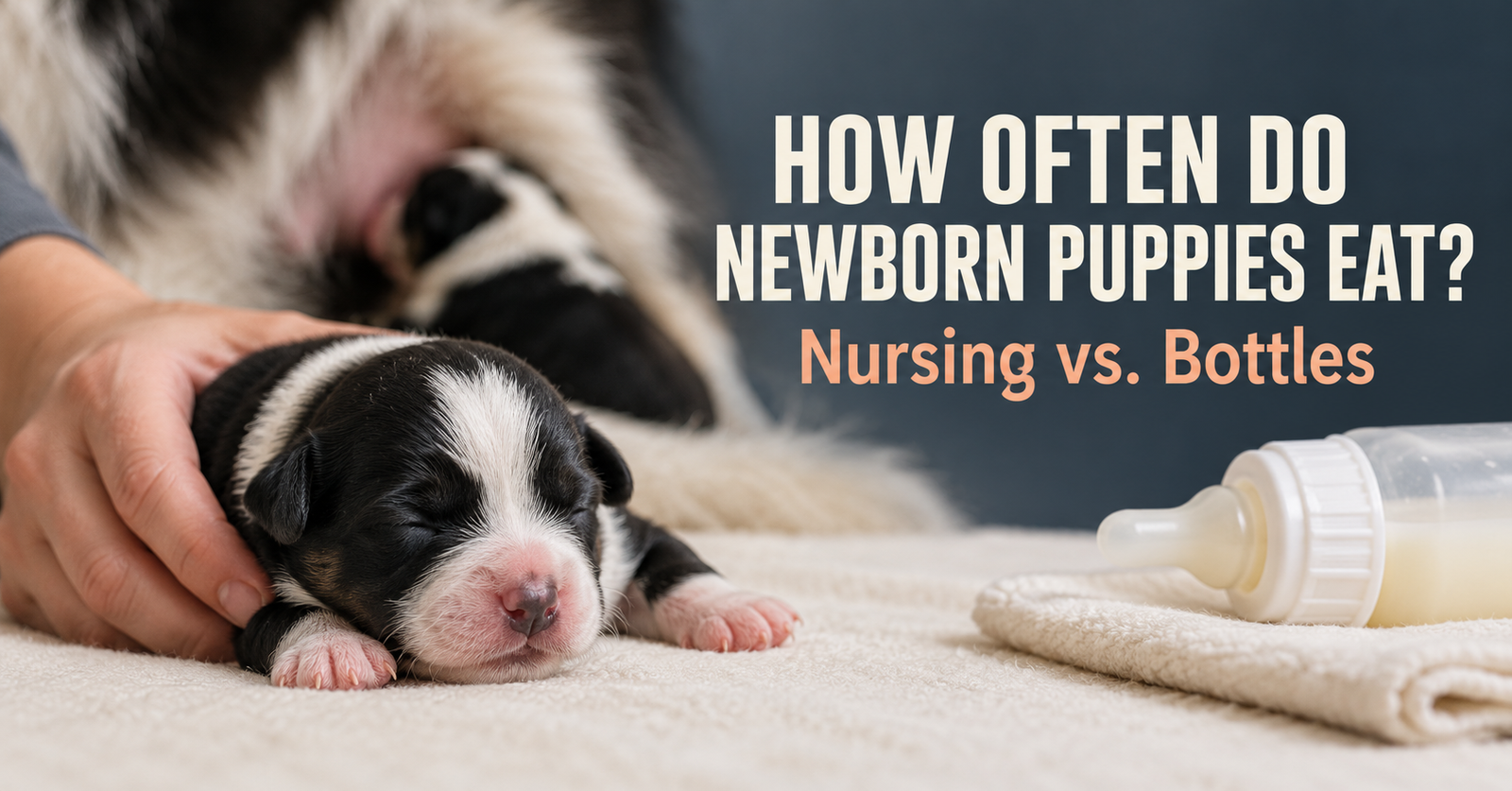
If you’re also sorting out nursing or bottle feeding, my newborn puppy feeding guide explains what to watch during and between feeds.
How Warm Should the Puppy Area Be?
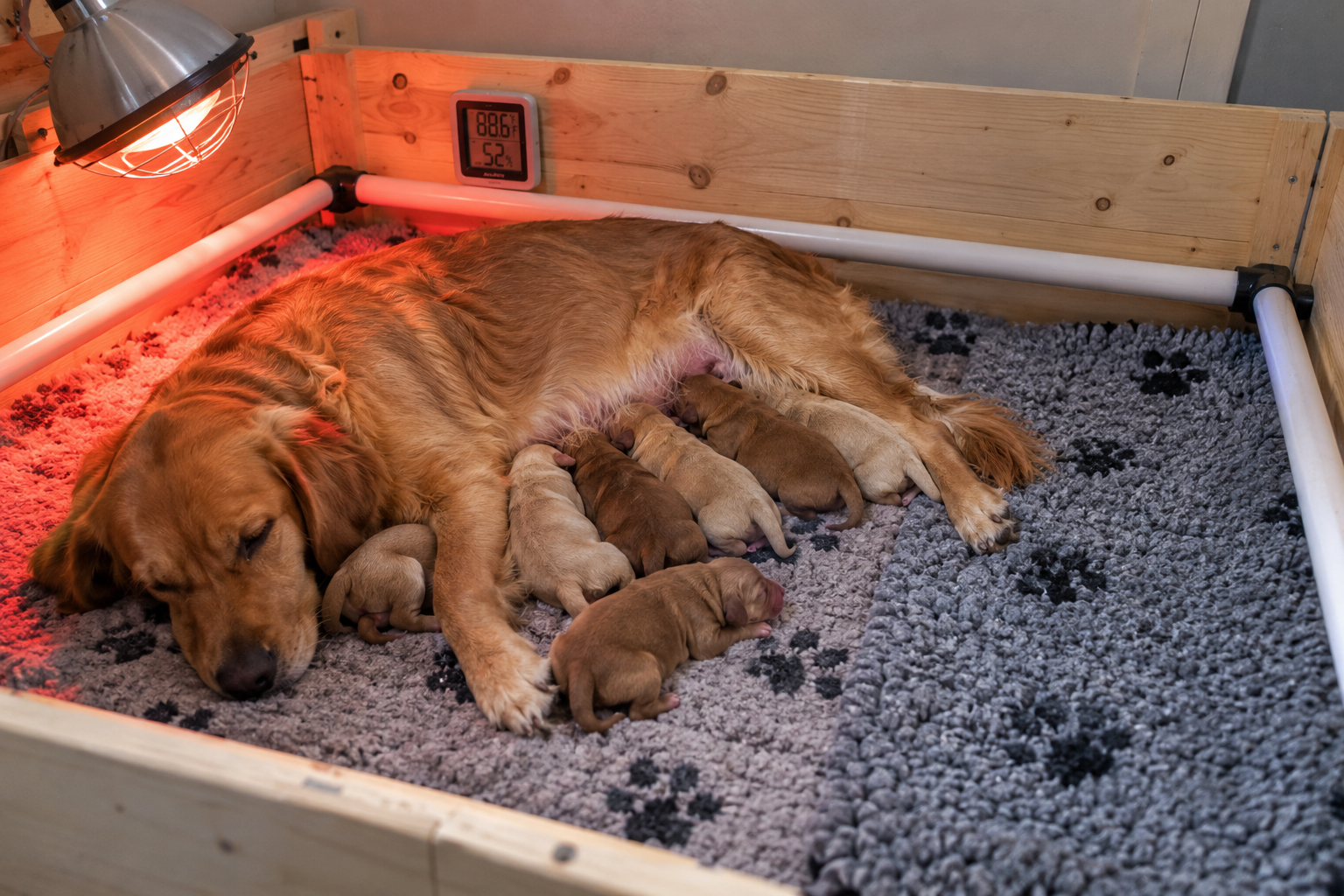
VCA recommends an immediate environmental temperature of about 85°F to 90°F during the first four days, particularly when the mother isn’t providing warmth.
That is a starting point for the puppies’ environment, not an instruction to heat every part of your house to 90 degrees.
The setup matters.
Puppies lying with mom receive additional warmth. An orphaned puppy lying alone has different needs.
Measure Where the Puppies Rest
Place a suitable thermometer near puppy level, safely out of reach and positioned according to its instructions.
A thermostat across the room won’t tell you whether the bedding underneath a heat source is getting too hot.
Check the warmed area and the cooler area.
The temperature of the room, the bedding surface, and the puppy’s body are different measurements. Don’t confuse one with another.
Adjust as the Puppies Grow
The earliest temperature recommendations don’t stay the same forever.
As puppies develop, environmental warmth can gradually be reduced. Follow your veterinarian’s advice for their age, health, and housing.
Avoid suddenly removing heat because the calendar says they’ve reached a certain day. Look at the puppies and their environment together.


Set Up a Warm Area With Room to Move Away
I wouldn’t aim to make every inch of the box equally hot.
Provide a warmer section and a cooler section so the mother can choose where to settle. As puppies become able to move, that difference also gives them options.
However, a temperature gradient is only one safeguard.
A weak newborn may not be able to crawl away from excessive heat. You still have to check the equipment and the puppies.
Keep Mom Comfortable
The mother needs to be able to nurse and rest without being forced directly under strong heat.
If the setup makes her uncomfortable, she may spend less time lying with the puppies.
Give her access to fresh water and space to change positions safely.
Panting alone doesn’t tell you the cause, especially after delivery. Persistent heavy panting, distress, weakness, or other concerning changes warrant a call to your veterinarian.
Recheck After Changing Anything
Moving a lamp, replacing bedding, adjusting a thermostat, or changing the box’s location can change conditions.
Make one adjustment, then check what it actually did.
Don’t assume a setting that worked earlier is still right after the mother rearranges her bedding or the room temperature changes.
Using a Heating Pad Safely
A heating pad can provide warmth, but not every pad is suitable for newborn animals.
Use equipment intended for the purpose, and follow its instructions. Ask your veterinarian whether it is appropriate for your box and litter.
Protect Puppies From Direct Heat
Puppies should not lie directly against an exposed hot surface.
PDSA advises placing protective bedding between puppies and a heat pad to reduce burn risk. Keep that protective layer flat and secure rather than adding a loose pile of blankets.
Don’t fold, cover, or position a heating device in ways its manufacturer prohibits.
Check the Surface, Not Just the Control
A low setting on a dial doesn’t prove the surface is safe.
Bedding, pressure, and equipment placement can affect how heat builds up.
Monitor the surface where puppies lie with suitable equipment. Your hand can alert you to obvious heat, but it isn’t a substitute for measurement.
Keep Cords Out of the Way
Route cords away from the mother and puppies.
Check for damage, moisture, loose connections, or anything that could be chewed or pulled.
A heating device should fit safely into the setup. If using it requires running exposed cords through the litter’s resting area, rethink the arrangement.
Using a Heat Lamp Safely
Heat lamps can warm a puppy area, but they also bring burn, overheating, and fire risks.
Secure the fixture so the mother cannot knock it into the box. Keep it away from bedding and other flammable materials, following the manufacturer’s required clearances.
There Isn’t One Safe Height for Every Lamp
Bulb wattage, fixture design, room conditions, and distance all affect the heat reaching the puppies.
That’s why I wouldn’t give you one hanging height and call it safe for every situation.
Follow the equipment instructions and measure conditions at puppy level.
Don’t Aim Strong Heat Across the Whole Box
Leave an area away from direct heat.

Watch the mother’s comfort and check the puppies individually. Don’t assume a quiet puppy under a lamp is comfortable simply because it isn’t crying. A digital scale for puppy weights can also help you monitor each puppy as part of routine newborn checks.
Veterinary whelping guidance warns that heat lamps can overheat both the mother and puppies.
Dry Bedding Helps Puppies Stay Warm
A warm room doesn’t make wet bedding a good place for newborns.
Birth fluids, spilled water, and soiled bedding can leave puppies lying on a damp surface.
Have clean replacements ready so you can change bedding without leaving the litter out in the cold.
Warmth Shouldn’t Come From Loose Blanket Piles
This is something I put a lot of importance on from experience.
Fluffy blankets may look cozy, but puppies can work underneath them and disappear from view.
Then mom lies down, and a puppy can become trapped or crushed.
Choose a dry, flat, secure surface rather than adding more loose bedding.
Count Puppies Before Mom Settles Again
After a bedding change, account for every puppy.
Check along the walls and under folds. Make sure none are positioned where mom is about to lie down.
A puppy can become pinned between her body and the box wall, even without being completely underneath her.
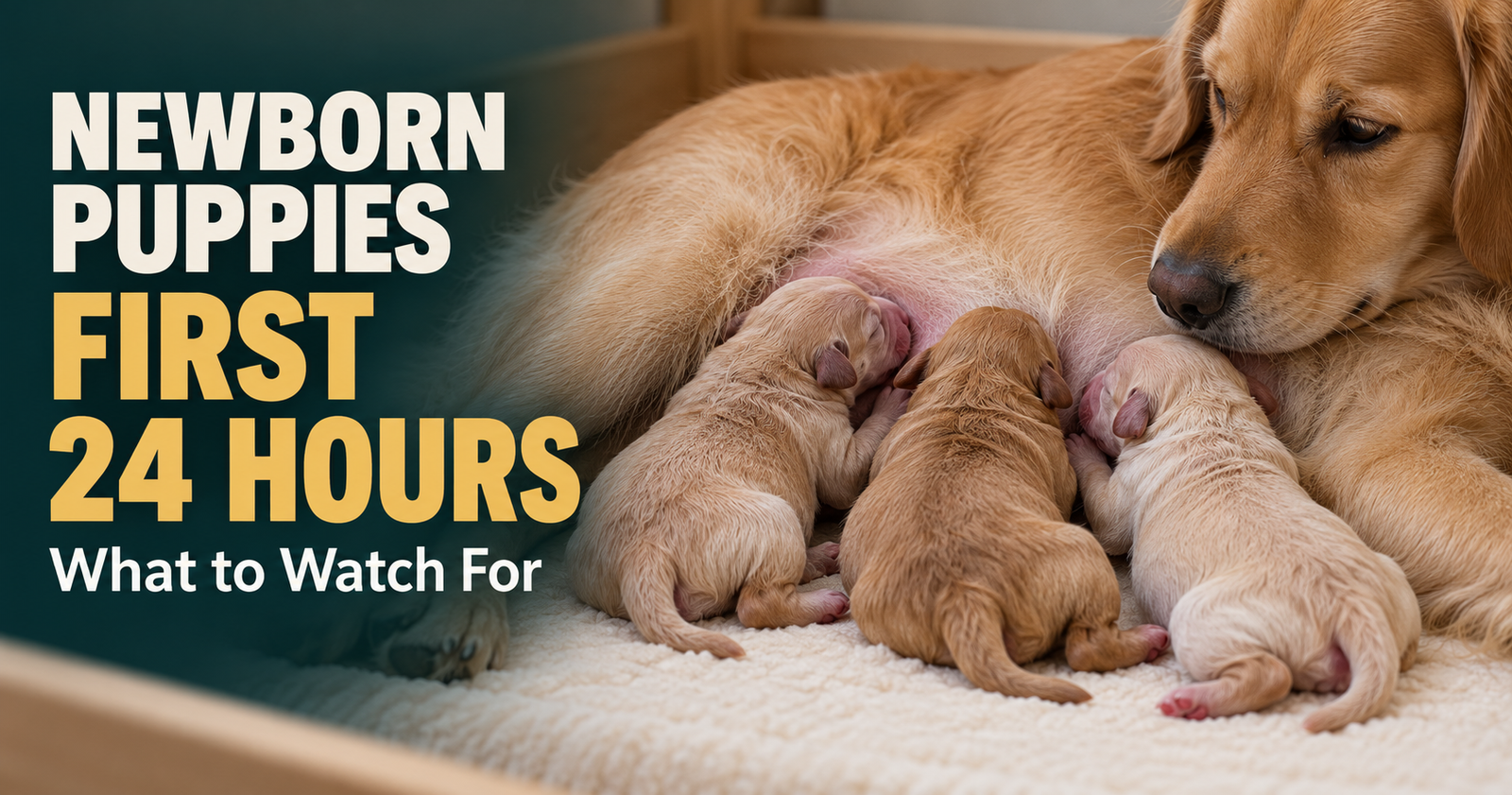
My guide to the first 24 hours with a newborn litter covers those bedding and trapping concerns alongside the other early checks.
How Can You Tell if Puppies Are Too Cold?
From my experience, puppies often cry when they’re cold or hungry.
Persistent crying is a reason to check them, especially if one has become separated from the others.
But crying doesn’t tell you the cause by itself.
Look for More Than One Clue
Pay attention to a puppy that feels unusually cool, has trouble nursing, becomes less active, or seems weaker than before.
A tightly gathered litter may be seeking warmth, but huddling alone isn’t a diagnosis. Puppies naturally rest together, too.
Check the environment and the individual puppies rather than changing the heat based on one behavior.
Quiet and Settled Is Usually Reassuring
Warm puppies that have nursed and are sleeping quietly are usually showing you something good.
That is the settled behavior I want people to recognize.
VCA also describes warm, content puppies as generally quiet, while restless crying can indicate a problem.
Still, a puppy that becomes cold and weak may stop crying. Quiet is reassuring when the puppy is also feeding, responsive, and progressing appropriately.
How Can You Tell if Puppies Are Too Hot?
Puppies spreading away from a heat source, appearing restless, or seeming uncomfortable should prompt you to check conditions.
Those behaviors aren’t proof of overheating, but they are reasons to measure the temperature and inspect the setup.
Breathing changes, marked weakness, or reduced responsiveness need urgent veterinary attention.
Don’t Wait for Every Puppy to React
One puppy may be directly over a hot spot while the others are comfortable.
Check individuals, particularly puppies that cannot move well.
A thermometer in the cooler corner won’t reveal a dangerously hot bedding surface beneath a puppy.
Don’t Chase Crying With More Heat
If puppies cry, check warmth and feeding before adjusting anything.
They could be cold, hungry, too hot, trapped, or unwell.
Turning the heat up repeatedly without measuring can create a new problem.

What to Do if a Newborn Puppy Is Cold and Weak
Call your veterinarian or an emergency clinic immediately.
A cold, weak puppy needs more than an adjustment to the room thermostat.
Tell the clinic the puppy’s age, whether it has nursed, how responsive it is, and what you’re seeing.
Warm Carefully While Getting Instructions
Veterinary references recommend gradual rewarming because rapid warming can cause complications.
Don’t press the puppy against a hot pad, place it close to a strong lamp, or use very hot water.
Get instructions appropriate to its condition and arrange transport if advised. Don’t delay leaving for care while trying to finish warming it at home.
Don’t Force Milk Into Its Mouth
A hypothermic puppy may not feed or digest normally.
Forced feeding can lead to regurgitation and aspiration, meaning milk enters the airway.
Merck advises delaying feeding until the newborn has been appropriately warmed. Follow your veterinarian’s guidance on when and how feeding should resume.
Consider Why It Became Cold
Sometimes the environment explains it: damp bedding, a draft, or separation from mom.
But low body temperature can also accompany illness.
If one puppy keeps becoming chilled while the others are doing well, don’t assume it simply prefers the wrong corner. It needs assessment.
Keep Checks Simple Enough to Repeat
You don’t need to handle every puppy constantly.
A useful check can be brief.
Look at the Heat Setup
Confirm the equipment is working and temperatures are appropriate.
Check for shifted bedding, hot spots, moisture, and drafts.
Look at the Puppies
Are they nursing, moving normally for newborns, and settling afterward?
Is one separated, crying persistently, or less responsive than before?
Look at Mom
Can she lie comfortably and reach her puppies?
Does she have water, and can she move away from supplemental heat?
Recheck After Feeding or Bedding Changes
Return each puppy to a safe position.
Account for the whole litter before leaving them settled.
That consistent attention matters more than creating a complicated routine you can’t keep up with when you’re tired.
Questions About Keeping Newborn Puppies Warm
Is their mother’s warmth enough?
Sometimes a healthy mother staying close to her litter provides adequate warmth in an appropriate environment. But her presence isn’t a guarantee. Check conditions when she gets up, and pay attention to puppies that become separated or aren’t nursing well.
Should I cover the puppies with a blanket?
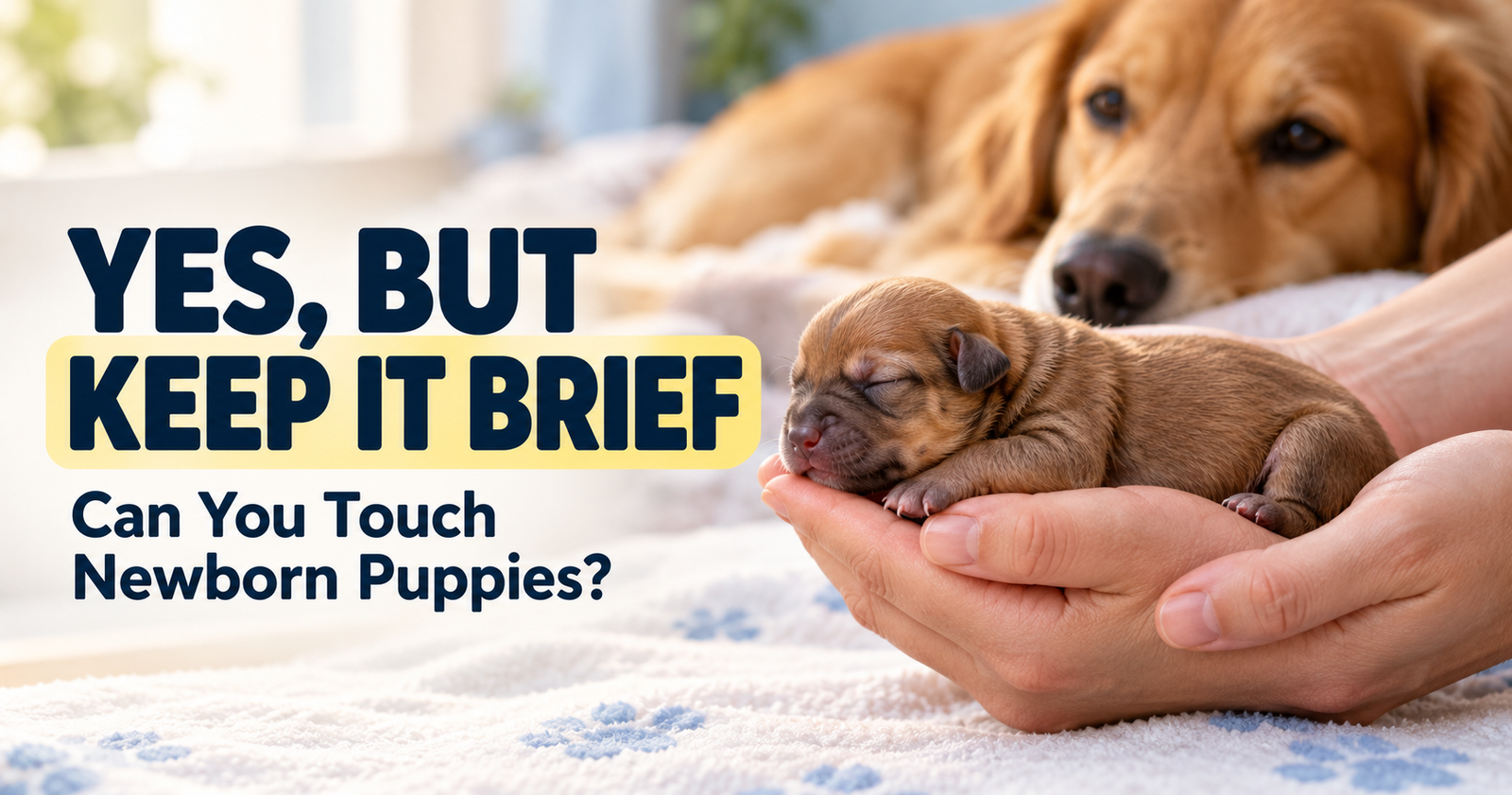
Avoid draping loose blankets over newborn puppies. They can become covered, trapped, or hidden when mom lies down. Use secure bedding and a properly managed warm environment instead. When a puppy is covered or trapped, handling a newborn puppy safely can be part of the necessary safety check.
Can I use a hot water bottle?
A hot water bottle can leak, cool down, or cause burns through direct contact. If your veterinarian recommends one temporarily, use the protective covering and placement they advise, and monitor it closely. It should not be a very hot object pressed against a puppy.
Does crying always mean a puppy is cold?
No. Hunger, discomfort, illness, and other problems can also cause crying. Check the puppy, its feeding, its position, and the temperature before deciding what needs to change.
Do orphaned puppies need different care?
Yes. Without their mother, they depend on you for warmth, feeding, cleaning, and help with elimination. Arrange a care plan with your veterinarian promptly, including overnight responsibilities. A warm bed alone doesn’t replace maternal care.
Written by Breeder Assistant, sharing practical guidance from a licensed dog breeder with many years of experience and 14 dogs total in a small breeding program.