

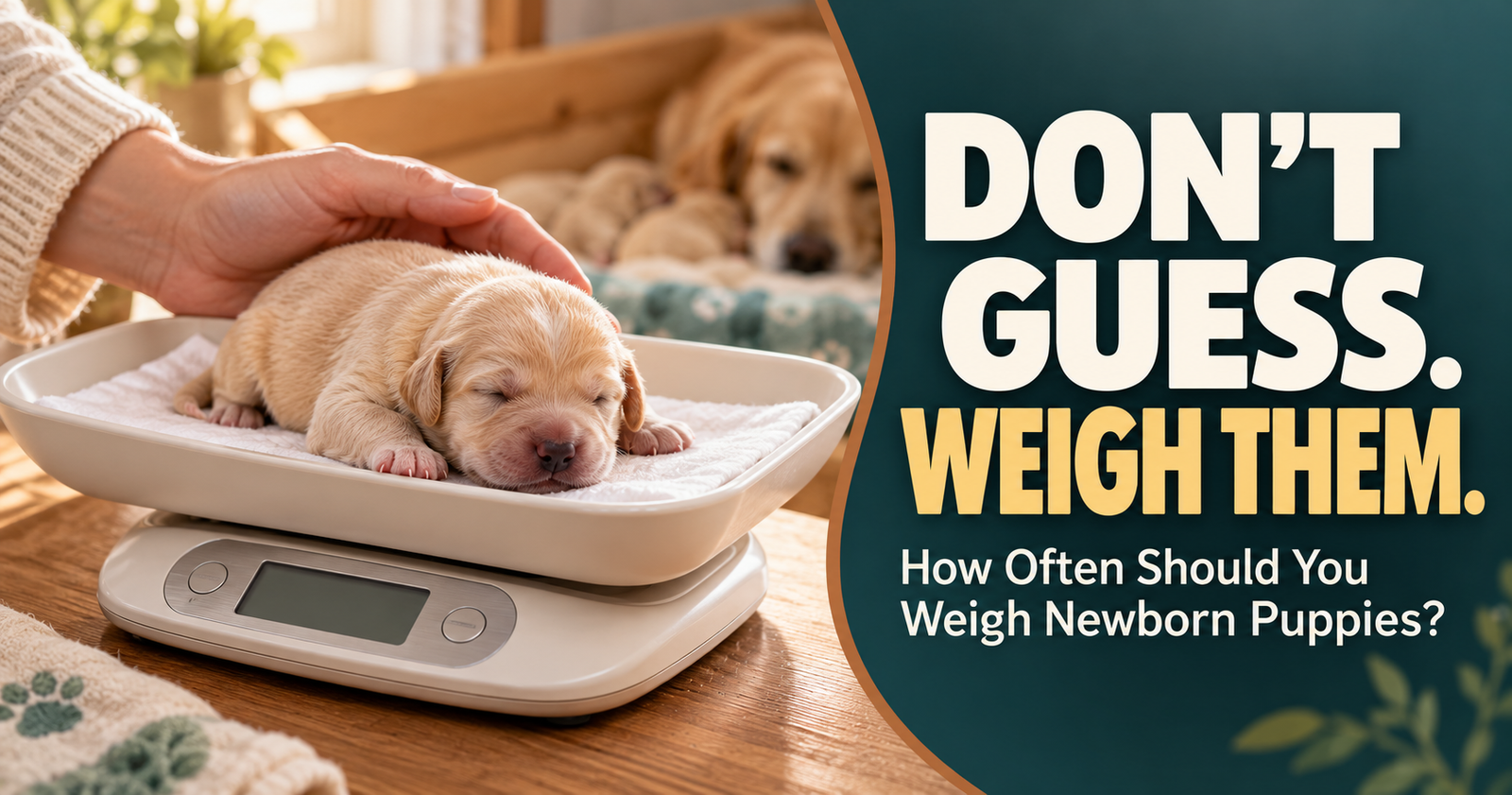
Weigh newborn puppies at least once a day during their first two to three weeks, beginning with a birth weight once they’re dry and stable. Additional checks around 12 and 24 hours after birth help establish their early progress. Puppies needing extra support may need closer monitoring under your veterinarian’s guidance. Weight is one part of the broader what to watch in newborn puppies during those initial hours.
A scale helps answer something you can’t always tell by looking: is this puppy actually gaining?
I’m a licensed breeder with 14 dogs total and many years of experience. From my experience, puppies that have eaten, are comfortably warm, and settle quietly are usually showing you something good.
But a weight record gives you another piece of the picture. A puppy can be underneath mom without getting as much milk as you think. Pair weight records with observations of whether puppies are getting enough milk.
Start With a Birth Weight
Every puppy needs its own starting point.
Once the puppy is dry, breathing normally, and stable, record its weight. Helping a struggling puppy comes before getting a number on the scale.
The Royal Kennel Club recommends recording birth weights, checking again at 12 and 24 hours, and continuing daily measurements for two to three weeks.
Didn’t Get a Birth Weight? Start Now
An unexpected litter can leave you trying to catch up.
Start with an accurate weight now. Write down the date, time, and puppy’s age.
Call it the first recorded weight rather than guessing what the puppy weighed at birth.
Keep Each Puppy Separate in Your Notes
Weighing the whole litter together won’t tell you whether one puppy is falling behind.
Give each puppy a clear number or identifying description and use it consistently.
If several look alike, establish a safe identification method before their records become mixed up.
Is Once a Day Enough?
For a healthy litter nursing well, daily weighing is a useful baseline.
Morning and evening measurements can help when closer monitoring is appropriate. Your veterinarian may recommend a particular schedule for a small, weak, or supplemented puppy.
The important thing is having a routine you can repeat and knowing when the puppy’s condition calls for more than another weigh-in.
Compare Similar Times
Try to weigh at roughly the same time each day.
Use the same scale and units. Keep the relationship to feeding reasonably consistent when practical.
You don’t have to make the whole litter follow a perfect schedule. Just record enough information that the measurements make sense.
Don’t Keep Weighing Instead of Calling
A puppy that is weak or refusing to nurse needs help.
Repeatedly putting it back on the scale won’t explain the problem.
If the puppy looks unwell, don’t wait for tomorrow’s measurement before contacting your veterinarian.

Choose a Scale That Shows Useful Changes
Capacity and precision are different things.
A scale may hold a growing puppy comfortably but still be too coarse to show the small changes you want to follow in a tiny newborn.
Look for a stable platform, a tare function, and measurements fine enough for the puppies you’re raising.
A Pet Scale Worth Considering
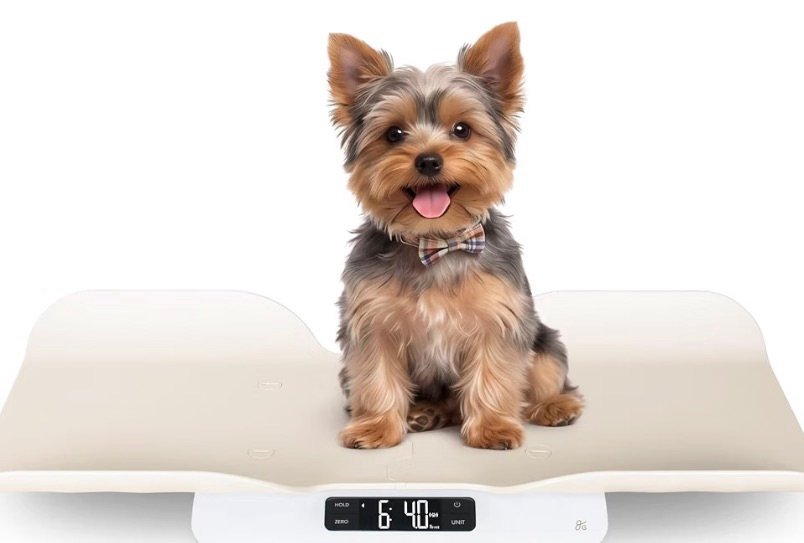
The Greater Goods Wiggle-Proof Digital Pet Scale is worth considering if you want a removable tray and room to keep weighing puppies as they grow. It has a capacity of up to 44 pounds, a tare function, and a movement-compensation feature designed to help obtain readings from moving pets.
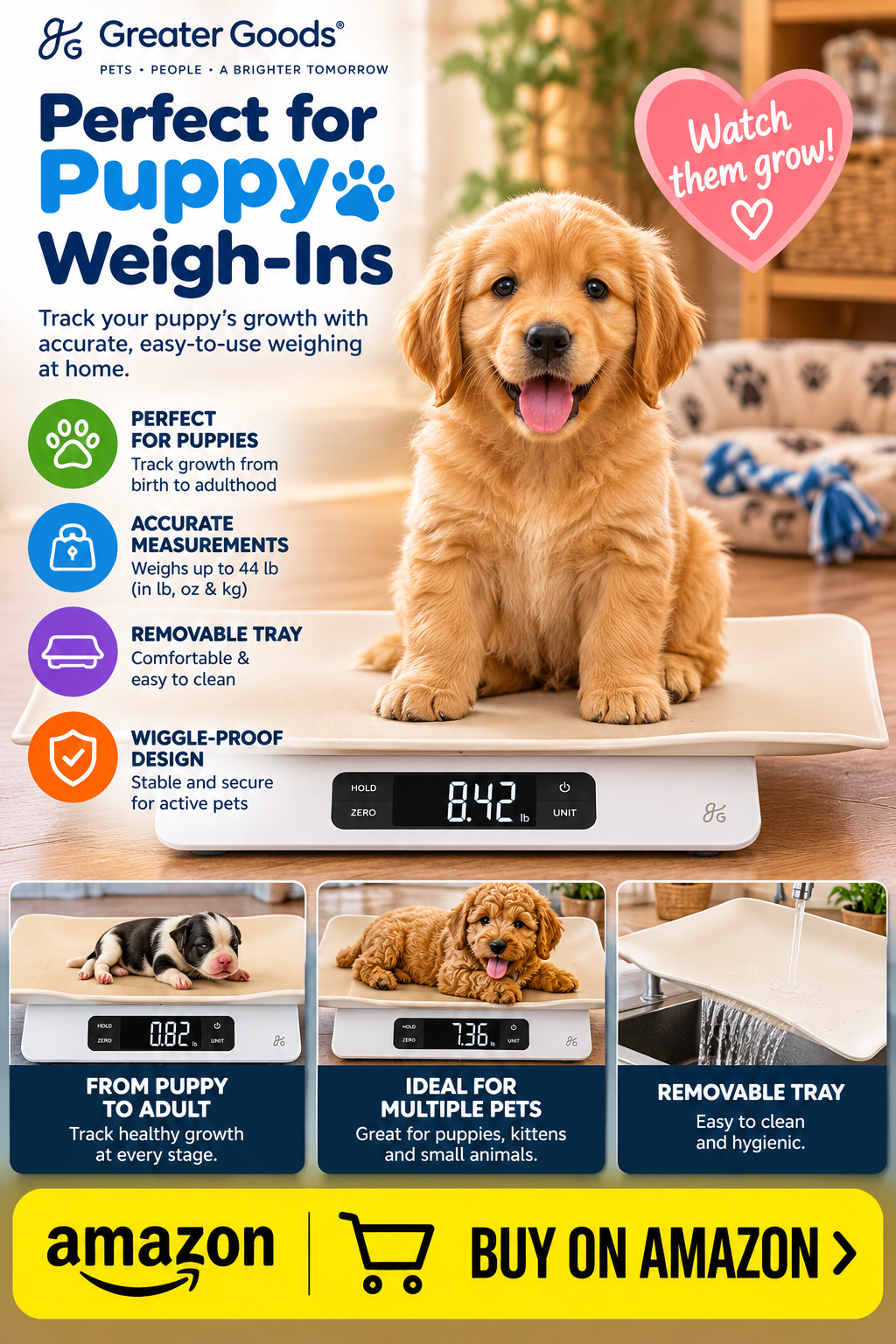
Those are useful features for litter care. The tray provides a dedicated weighing surface, while tare lets you subtract a liner or container.
Greater Goods advertises detection of weights as small as 5 grams. That statement alone doesn’t establish one-gram resolution or accuracy, so check the current model’s specifications before buying it for very small newborns.
Match the Scale to Your Puppies
For a tiny newborn, a few grams may be meaningful.
If your veterinarian wants measurements in one-gram increments, choose a scale that specifically provides that resolution and is suitable for the puppy’s weight.
A larger pet scale can remain useful as puppies grow, even if you use a finer-resolution scale during their smallest stage.
I wouldn’t choose equipment by maximum capacity alone.
How to Weigh a Newborn Puppy Safely
Have everything ready before lifting the puppy.
You need the scale, a secure container if necessary, a clean flat liner, and somewhere to record the result.
Set the Scale on a Stable Surface
Use a firm, level surface.
Keep the setup low enough to reduce fall risk, and keep your hands close while the puppy is on it.
Don’t balance a scale on your lap or walk away to find your phone.
Add the Liner Before Zeroing
Put the tray, container, and liner in place first.
Then use the tare button so the display reads zero.
Otherwise, the measurement includes whatever you placed underneath the puppy.
Use a Flat, Secure Liner
A small liner can provide traction and keep the surface comfortable.
Avoid loose blanket piles. They can make it harder to position the puppy safely and keep the measurement stable.
Make sure the tray or container isn’t touching another object that could affect the reading.
Wait for a Stable Number
Gently place the puppy on the scale.
Keep a hand nearby without pressing down or supporting part of its weight while taking the reading.
If the number looks surprising, check the setup and repeat once.
Don’t turn a questionable measurement into a long session away from mom.
Record and Return
Write down the result immediately.
Then return the puppy to a safe, warm position.
Count the litter and check where each puppy is before the mother settles again.

Keep Puppies Warm During Weighing
Warmth is one of the things I take most seriously with newborn puppies.
They can get cold quickly, and a chilled puppy may become weak and have trouble nursing.
Get your equipment ready first so weighing stays brief.
My guide to keeping newborn puppies warm without overheating explains the setup and temperature checks in more detail.

Work With One Puppy at a Time
There’s usually no need to remove the whole litter for routine weighing.
Weigh one puppy, record its result, and return it safely before moving to the next.
That also makes it easier to keep identities and measurements straight.
Check the Bedding When You Return Them
Don’t place a puppy beneath loose blankets or against a wall where mom could pin it.
From my experience, puppies becoming hidden or trapped is a real concern.
A quick weight check should end with the puppy back in a safe position, not simply back somewhere inside the box. The guidance on brief newborn puppy handling can help keep these necessary checks purposeful and short.

What Should Your Puppy Weight Record Include?
Keep it simple enough to use when you’re tired.
Puppy Number or Description
Use the same identification every time.
Include the litter’s birth date so you can tell which litter the record belongs to later.
Date and Time
These help you compare the right intervals.
A change over 12 hours isn’t the same as a change over 24 hours.
Weight and Unit
Write “240 g” rather than just “240.”
Grams, ounces, and pounds shouldn’t be mixed without clear labels.
A Short Note When Something Changes
You don’t need a paragraph after every check.
“Needed help latching” or “bottle amount recorded separately” may be enough.
Record observations that could explain a change or help your veterinarian understand the situation.
Look at the Trend, Not Just One Number
Here’s a hypothetical example.
A puppy weighs 240 grams Monday morning and 258 grams Tuesday morning.
That is an increase of 18 grams over about 24 hours.
The percentage increase is 18 divided by 240, multiplied by 100: 7.5%.
This illustrates the calculation. It isn’t a target every puppy must match.
Compare the Puppy With Its Own History
Littermates can begin at different sizes.
A smaller puppy doesn’t need to weigh as much as the largest puppy to be making progress.
What matters is whether that individual is growing appropriately and doing well.
Don’t Expect the Same Gram Gain Across Breeds
A very small-breed puppy and a large-breed puppy have different expected growth patterns.
Ask your veterinarian what they want to see for your litter.
Avoid treating one fixed number of grams as a universal pass-or-fail test.
Quiet Puppies Are Usually Reassuring, but Weights Help Confirm Progress
From my experience, puppies often cry when they’re hungry or cold.
When they’ve eaten, are warm, and settle quietly together, that is usually encouraging.
I don’t want someone constantly disturbing a comfortable litter because the puppies are asleep.
But quietness should fit with the rest of what you’re seeing.
A settled puppy nursing well and gaining is different from a quiet puppy that is weak and difficult to wake.
VCA describes warm, content puppies as generally quiet and emphasizes regular weight records to monitor their progress.
Watch a Feeding When You’re Unsure
Look for attachment and rhythmic sucking.
Notice whether the puppy keeps searching, slipping off, or getting pushed away.
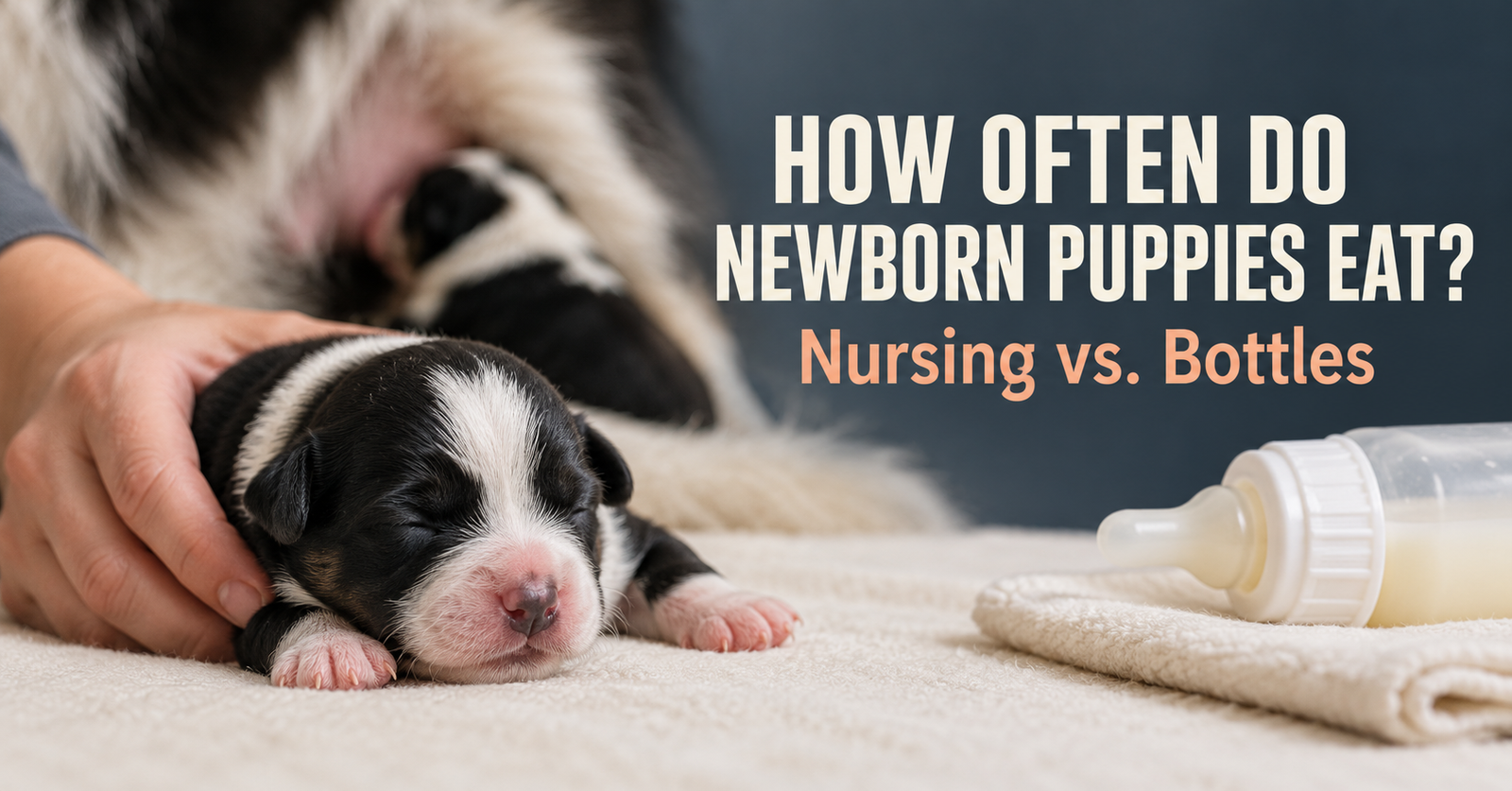
My article on how often newborn puppies eat covers nursing observations and how bottle feeding differs from feeding with mom.
What if a Puppy Isn’t Gaining Weight?
Start by checking the measurement.
Was the scale zeroed? Are the units correct? Is this the same puppy’s record?
If the lack of progress is real, contact your veterinarian promptly.
Poor weight gain, weakness, or irregular feeding deserves attention. Newborn puppies can deteriorate quickly.
Don’t Assume It Just Needs a Bigger Bottle
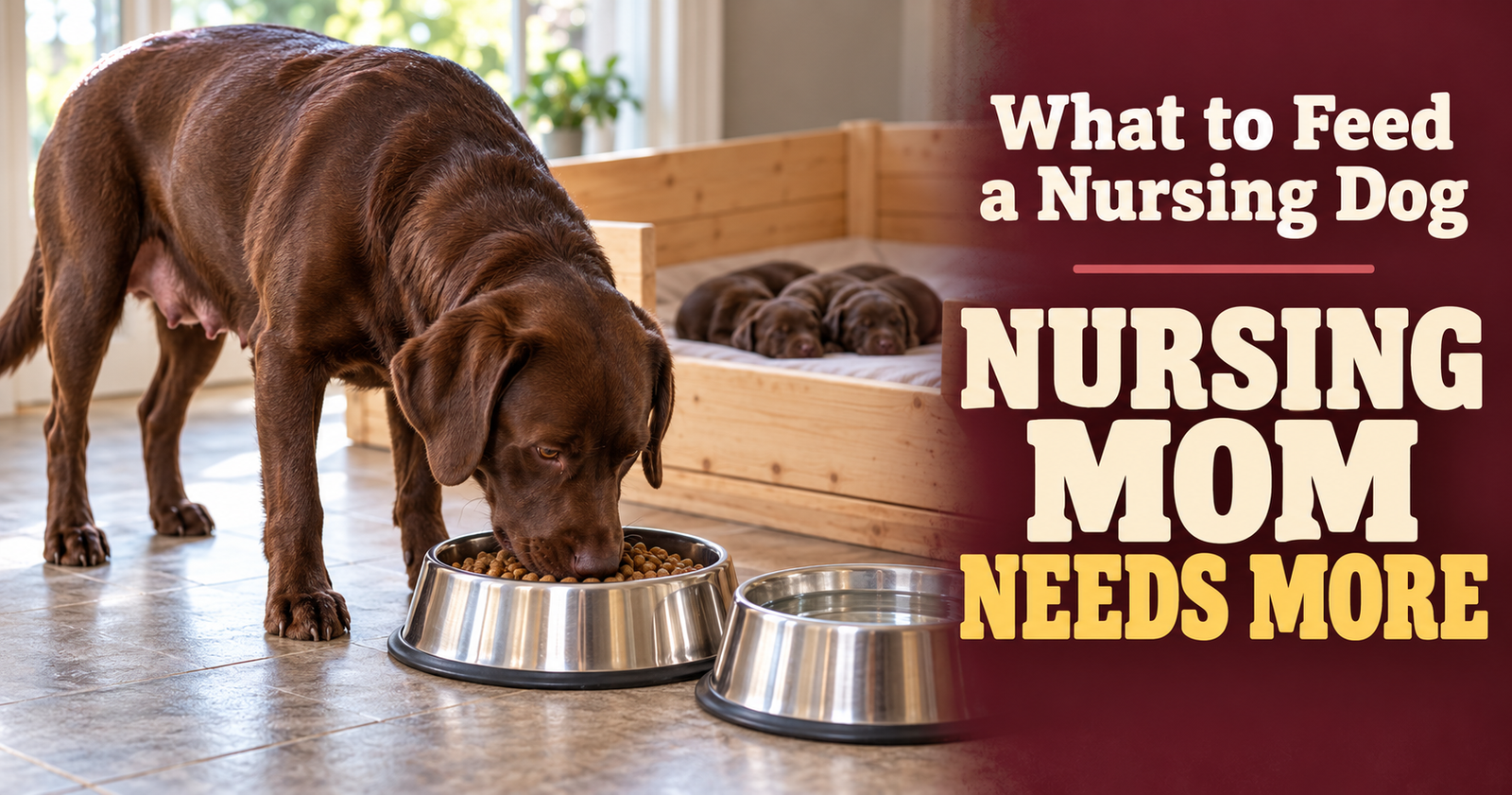
Milk intake may be part of the problem, but poor growth can have other causes. Because milk supply and maternal nutrition can affect nursing, feeding a nursing mother may help you assess that part of the picture.
The puppy may need help accessing mom, a supplementation plan, or an examination.
Adding more milk without understanding the situation can create feeding problems of its own.
Don’t Wait if the Puppy Is Cold or Weak
A cold, very weak puppy or one refusing to nurse needs immediate veterinary guidance.
Trouble breathing, collapse, or blue or gray gums or tongue requires emergency attention.
Don’t force milk into a chilled puppy’s mouth. Hypothermia affects digestion and can increase the risk of regurgitation and milk entering the airway.
Have Your Notes Ready
Tell the veterinarian the puppy’s age, weight history, feeding method, and what changed.
Include when it last successfully nursed.
That record gives them more useful information than saying the puppy seems smaller today.
Make Weighing Easy Enough to Keep Doing
A good routine shouldn’t require finding supplies scattered around the house.
Keep the scale, clean liners, and weight log together.
If the tray and growing-puppy capacity fit your needs, take a closer look at the Greater Goods pet scale. Confirm that its measurement increments are suitable for the puppies you’re monitoring.
Having the right equipment ready makes a brief daily check much easier.
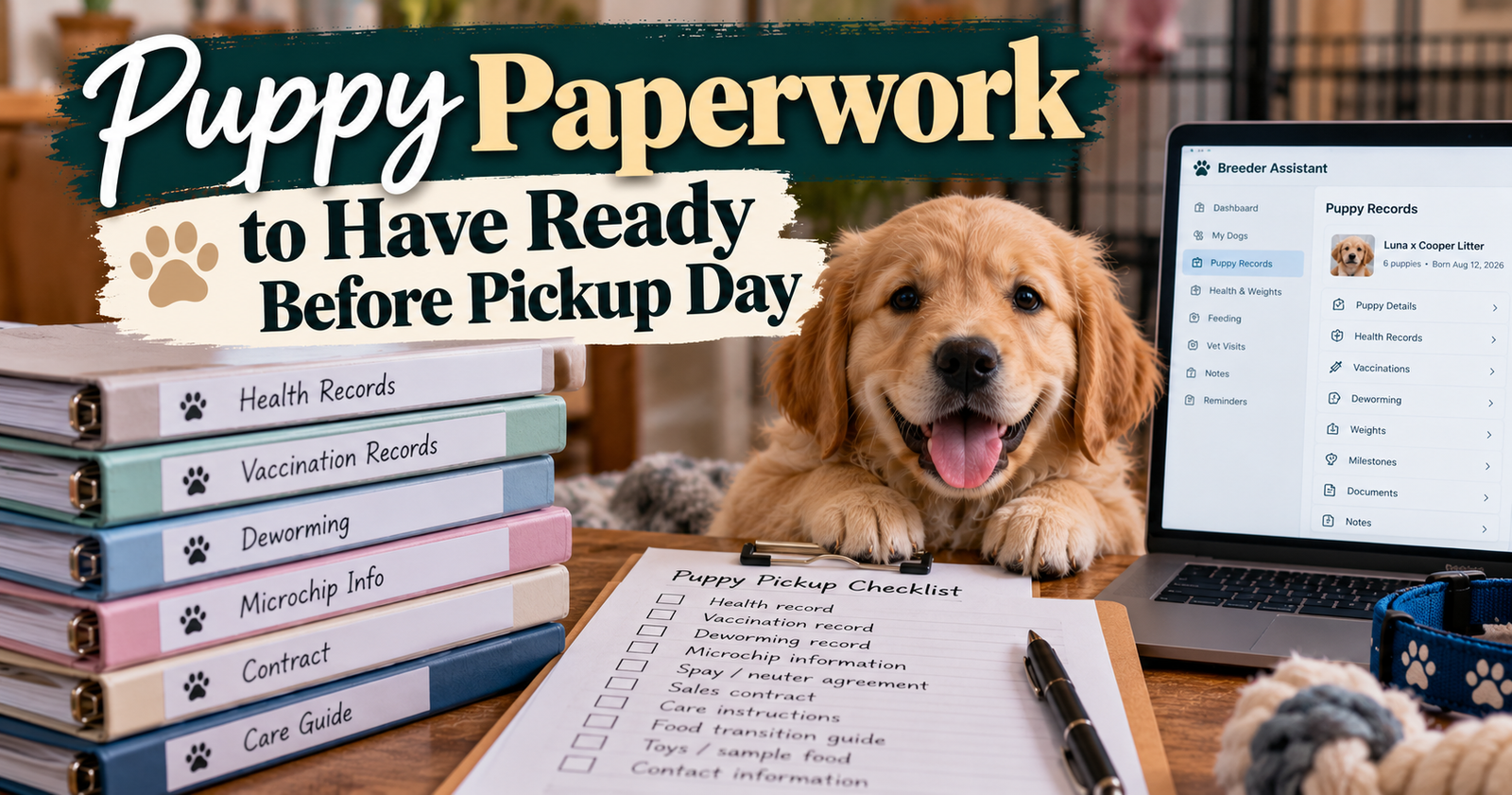
Keep the Wider Puppy Record Organized Too
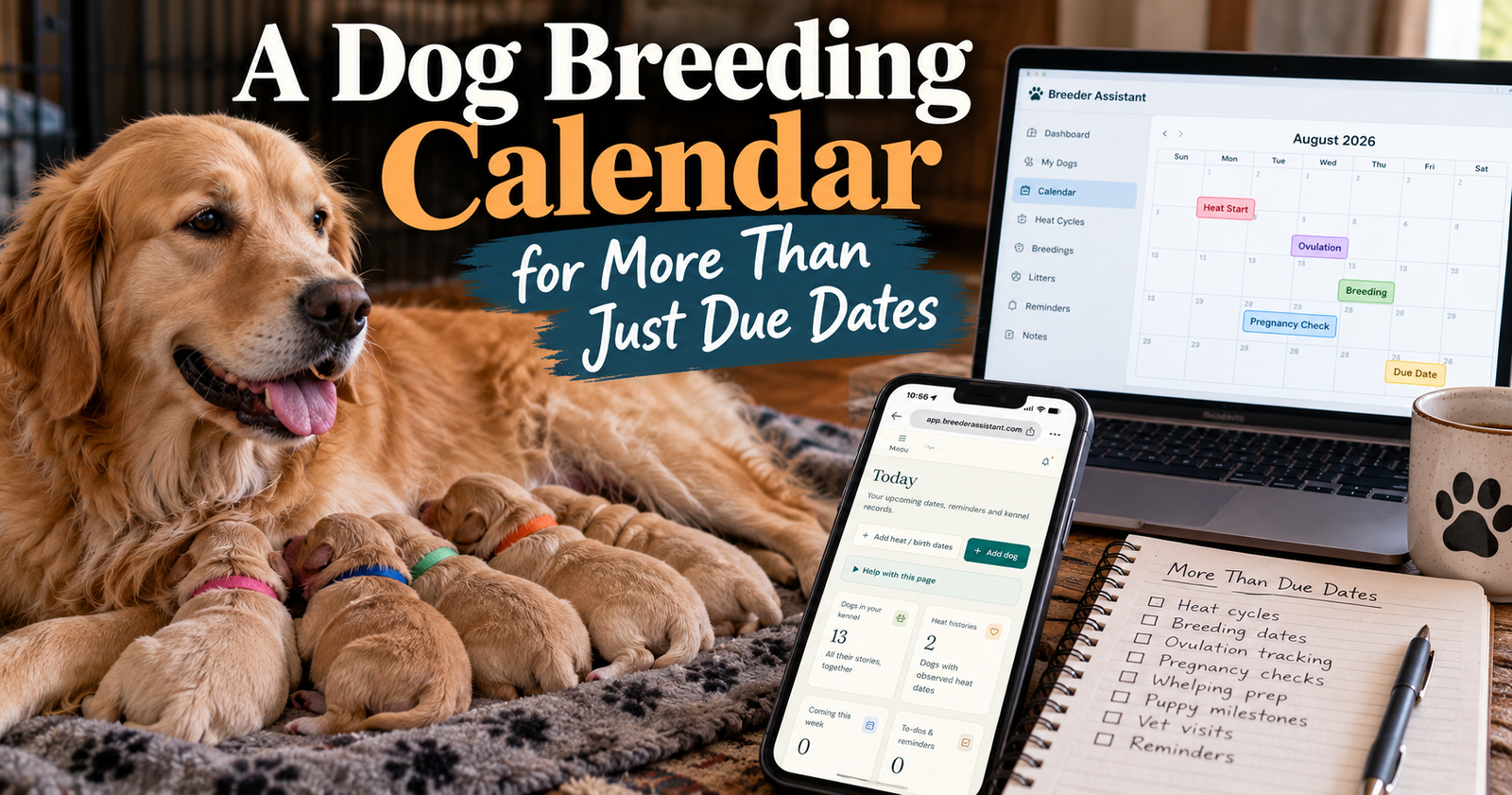
Use the same puppy number across weights, feeding notes, and veterinary information. The FAQ shows how to keep individual puppy records together with litter and care details.

For the wider organization, Breeder Assistant keeps individual puppy details connected to their litter, with identifying information, notes, and related appointments and reminders.
Keep your weight log tied to that identity, whether the measurements are in a notebook or spreadsheet.
The useful part is being able to find the correct history when you need it.
Questions About Weighing Newborn Puppies
Should I weigh puppies before or after nursing?
Use a reasonably consistent routine when practical. Don’t make a hungry puppy wait unnecessarily for a perfect measurement. Note whether a surprising reading happened just after feeding so you can interpret it in context.
Do healthy-looking puppies still need weighing?
Yes. Individual measurements can help you notice a puppy making less progress even when the litter looks settled. Keep the checks brief and purposeful.
Does the smallest puppy always need extra milk?
No. Size alone doesn’t establish a need for supplementation. Look at the puppy’s own growth, nursing ability, and condition rather than trying to make it match the biggest littermate.
What if a puppy loses a little weight on the first day?
Some veterinary guidance recognizes a small temporary first-day decrease. Don’t assume a particular loss is harmless, especially when nursing is poor or the puppy seems weak. Record it and contact your veterinarian for advice.
When can I weigh puppies less often?
Daily weighing through the first two to three weeks provides a useful baseline. After that, discuss an appropriate schedule with your veterinarian based on growth, weaning, and health. Puppies needing extra support may require closer monitoring for longer.
Written by Breeder Assistant, sharing practical guidance from a licensed dog breeder with many years of experience and 14 dogs total in a small breeding program.