

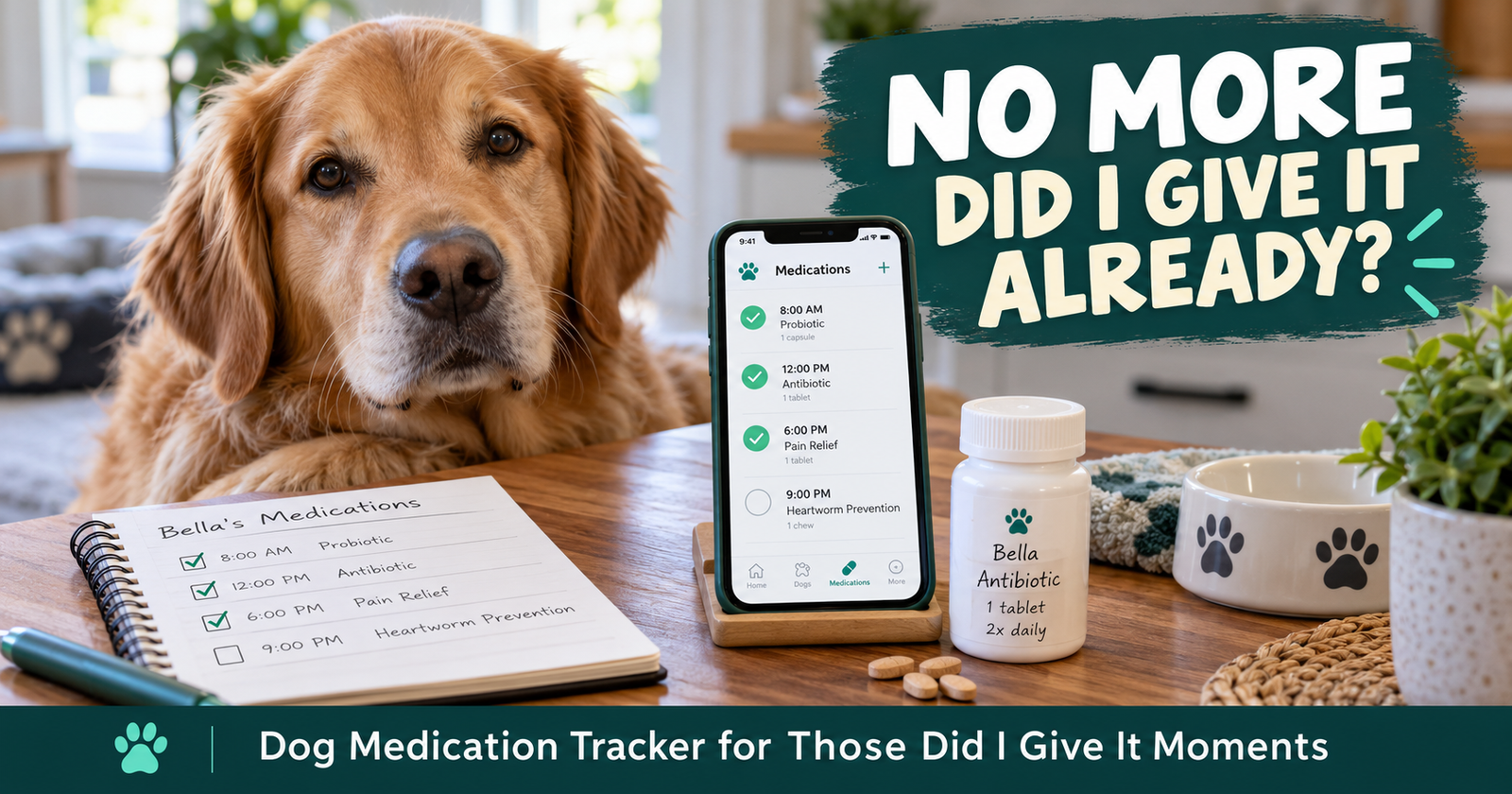
“Did I already give that to her?”
That’s a question I want a clear answer to when it comes to my dogs’ medication.
With 14 dogs total in my small breeding program, I understand how many details come with caring for several dogs. Add a prescription, a follow-up appointment, and different care dates, and there’s a lot to keep straight.
A useful dog medication tracker should make it easy to find the right dog, the instructions you were given, and what you actually recorded as completed.
That’s where Breeder Assistant can help. Medication entries belong with the individual dog’s care history, alongside the other information you need to manage that dog’s care.
The Problem Is All the Little Details Around the Medicine
Knowing a dog needs medication is only part of the job.
You also need to keep the product, directions, dates, and follow-up instructions straight.
Maybe two dogs are receiving different treatments. Maybe an appointment changed the original instructions. Maybe someone else helped with chores, and now you need to check what happened.
Those are ordinary situations. They deserve a better answer than “I’m pretty sure.”
A bottle tells you the instructions, but it doesn’t tell you what happened
The prescription label matters. Keep it.
But looking at the bottle won’t necessarily tell you whether this morning’s medication was given, whether the dog spit it out, or whether you called the vet about a problem.
That information needs its own record.
The label explains the prescribed plan. Your log explains what happened while following that plan.
A reminder tells you to check something
A reminder can bring a task back to your attention.
It doesn’t prove you completed it.
That distinction matters whether you use paper, your phone, or our app. Only record care as completed after it actually happened.
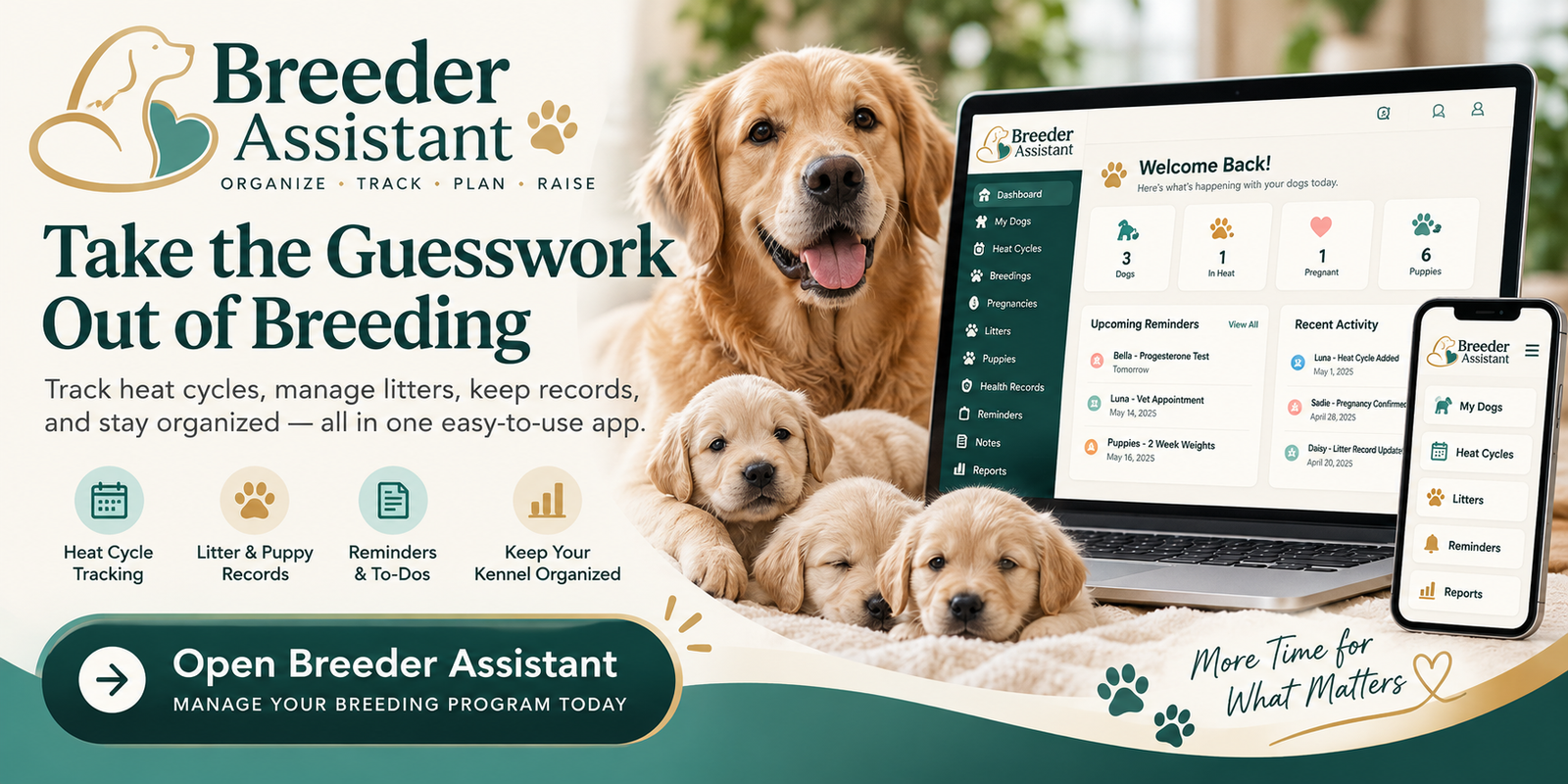
How Breeder Assistant Keeps Medication Information With the Right Dog
Breeder Assistant includes medication as a care-record category under an individual dog’s profile.
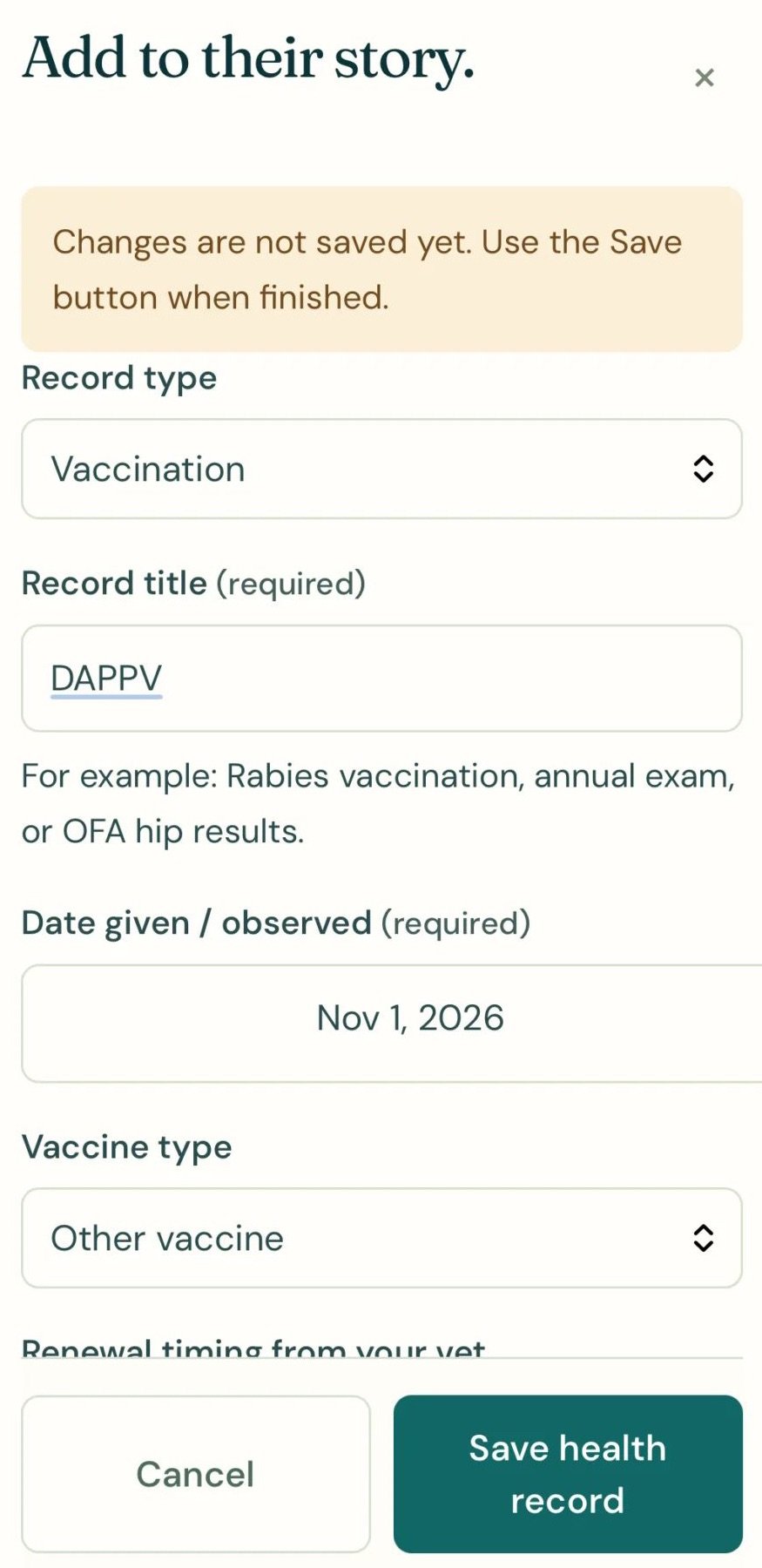
You can record the product or medication, the dose or directions as provided, the date, and the veterinarian or provider.
That means you can look at a particular dog’s history instead of sorting through a general notebook that also contains breeding dates, supply lists, and notes about another litter.
For breeders juggling several dogs, keep medication details attached to the dog they belong to rather than scattered across separate places.
Use the actual product name
“Her medicine” might make sense while you’re standing beside the bottle.
It’s less helpful weeks later.
Record the medication name as shown on the label. Include the strength when it’s listed, and keep the original directions available.
If anything is unclear, ask the prescribing clinic before copying it into your record.
Copy directions carefully
A tracker helps you preserve instructions. Accuracy starts with what you enter.
Keep the prescribed amount, frequency, and any special instructions clear. Don’t shorten something so much that you’ll have to guess what you meant later.
The app’s dose and directions field is for recording the information you were given. It doesn’t calculate or approve a dose.
Keep the Treatment Plan Separate From Completed Care
There are two different things worth keeping:
The plan: What the veterinarian instructed you to do.
The history: What care you actually gave and any relevant observations.
For a medication course, preserve the instructions in the dog’s records. If you need a dose-by-dose log, make each entry clear about the actual date and time.
Don’t assume a dated treatment entry, by itself, documents every dose in a course.
Be specific when the timing matters
A note that says “given today” may be enough for some general care records.
It isn’t enough to distinguish a morning dose from an evening dose.
When individual doses need tracking, include the actual time in your notes and use a consistent format.
For example:
“November 3, 7:10 a.m. Medication given according to the current prescription directions.”
That’s an example of how to write the record, not a medication schedule.
Record uncertainty honestly
If you aren’t sure whether medication was given, leave that uncertainty visible.
Don’t mark it completed just to clear a task.
If a dog spits out or vomits medication, contact your veterinarian for instructions rather than automatically giving more. The FDA explains that what to do depends on the medicine and how much may already have been absorbed.
Real-Life Problems the App Helps You Sort Out
The value of an app comes down to whether it makes an ordinary day easier.
Here are a few situations where having connected records helps.
You’re trying to remember which dog received which treatment
Open the individual dog’s care history.
That gives you a place to review the product, recorded directions, and completed-care date without mixing that dog’s information with another dog’s.
This becomes especially useful when dogs have similar names or receive care around the same time.
The follow-up date is somewhere in an old message
A medication record can include a next-due date when appropriate.
Use the date your veterinarian provided and be clear about what it means. A recheck appointment, a refill discussion, and another treatment date are different things.
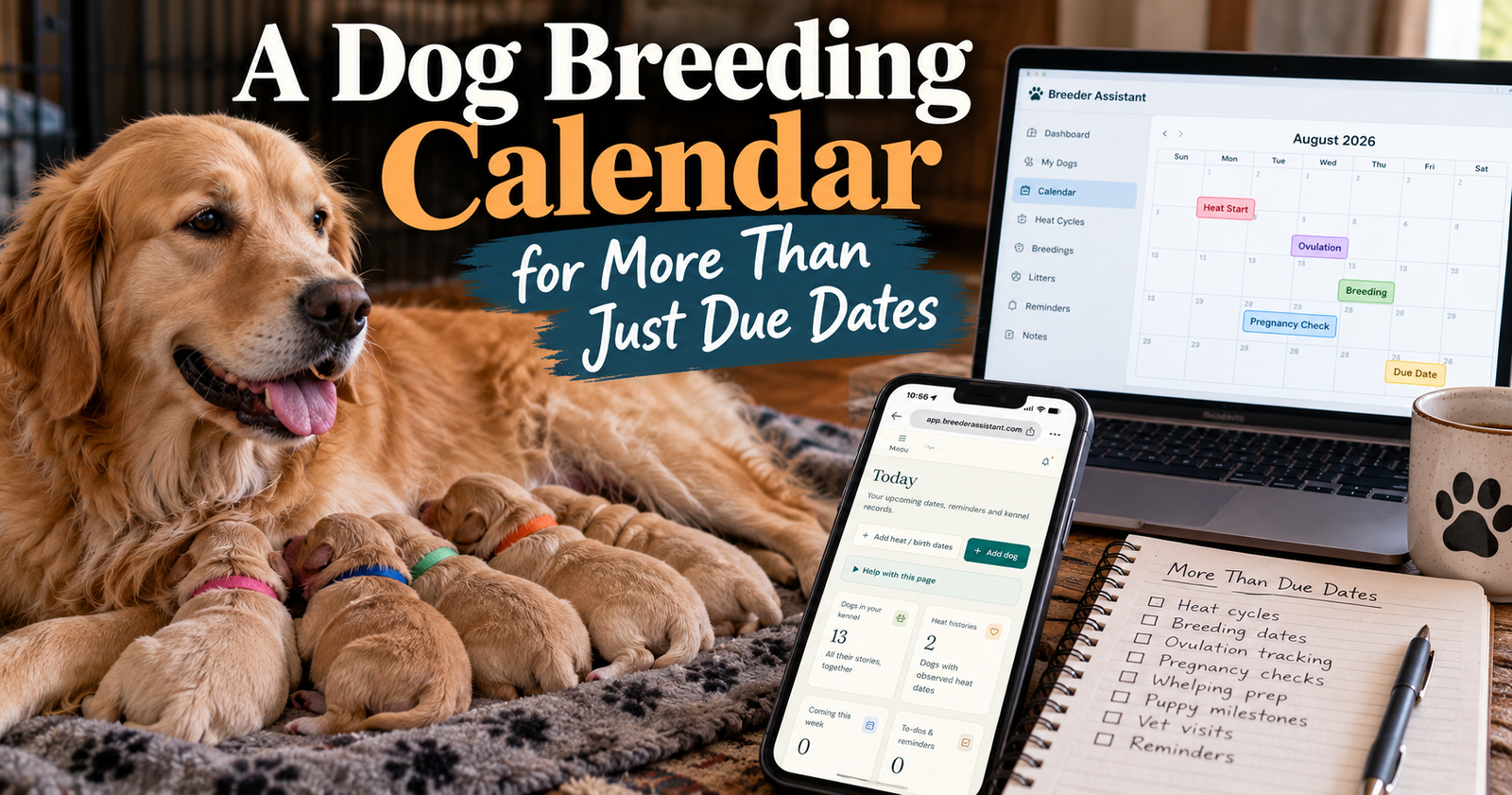
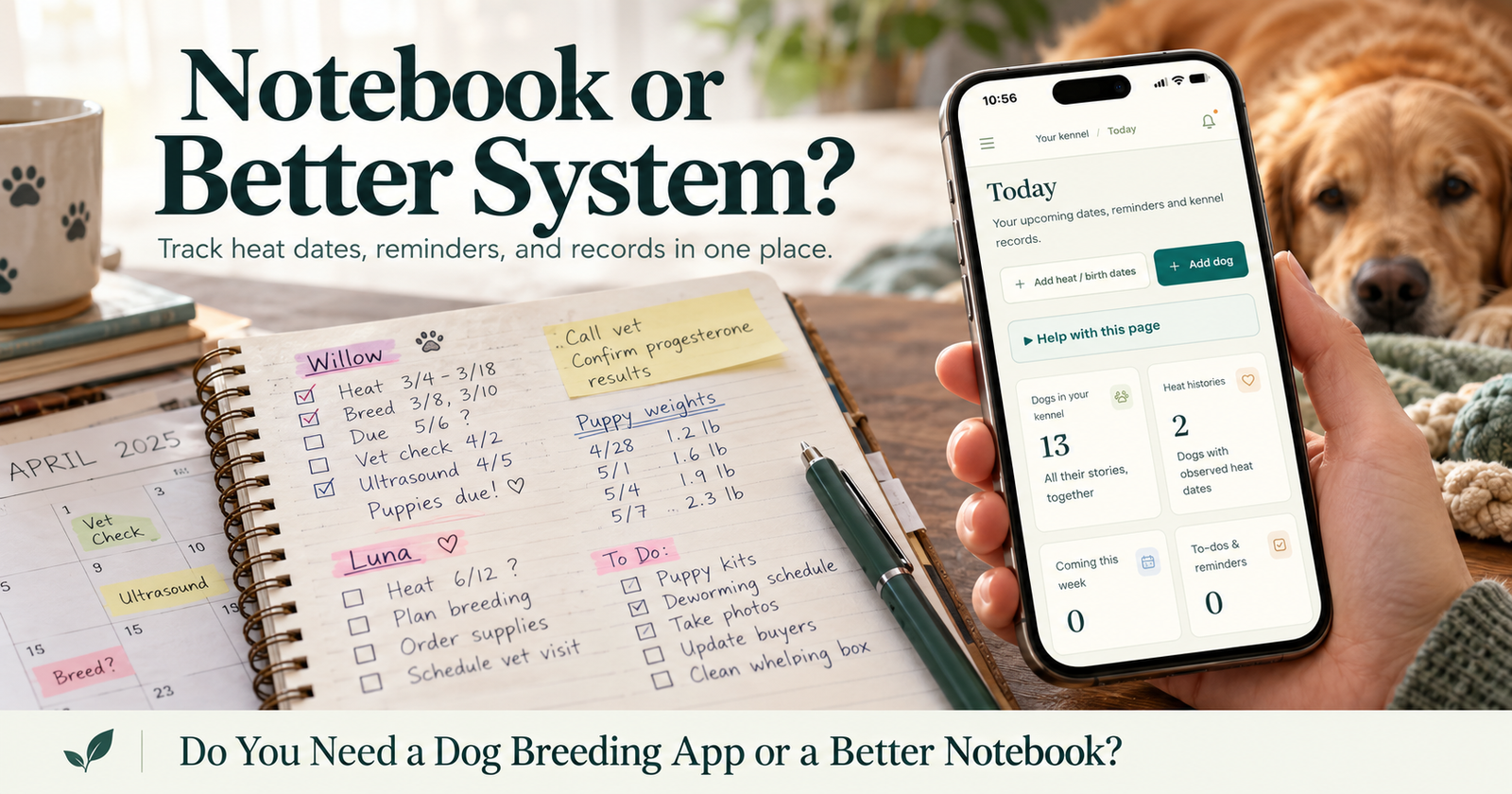
Breeder Assistant also has Today and Calendar views for reviewing approaching tasks and dates.
You can put your dogs’ care history and upcoming dates within easy reach instead of rebuilding the picture from messages every time.
Your veterinarian changes the instructions
Keep the earlier treatment history accurate, then clearly record the updated directions and when they took effect.
Check any related reminders too.
An old reminder can become confusing if it still points to instructions that have changed. The record and the plan need to agree.
You’re managing routine care for several dogs
Breeder Assistant also includes recurring care schedules for things such as deworming, parasite prevention, wellness visits, and custom care tasks.
You enter the schedule that applies to the dog. The app provides a place to track the next date and record care when it is completed.
That’s useful for remembering a veterinarian-directed routine across several dogs. Each dog’s product and schedule still needs to be checked individually.
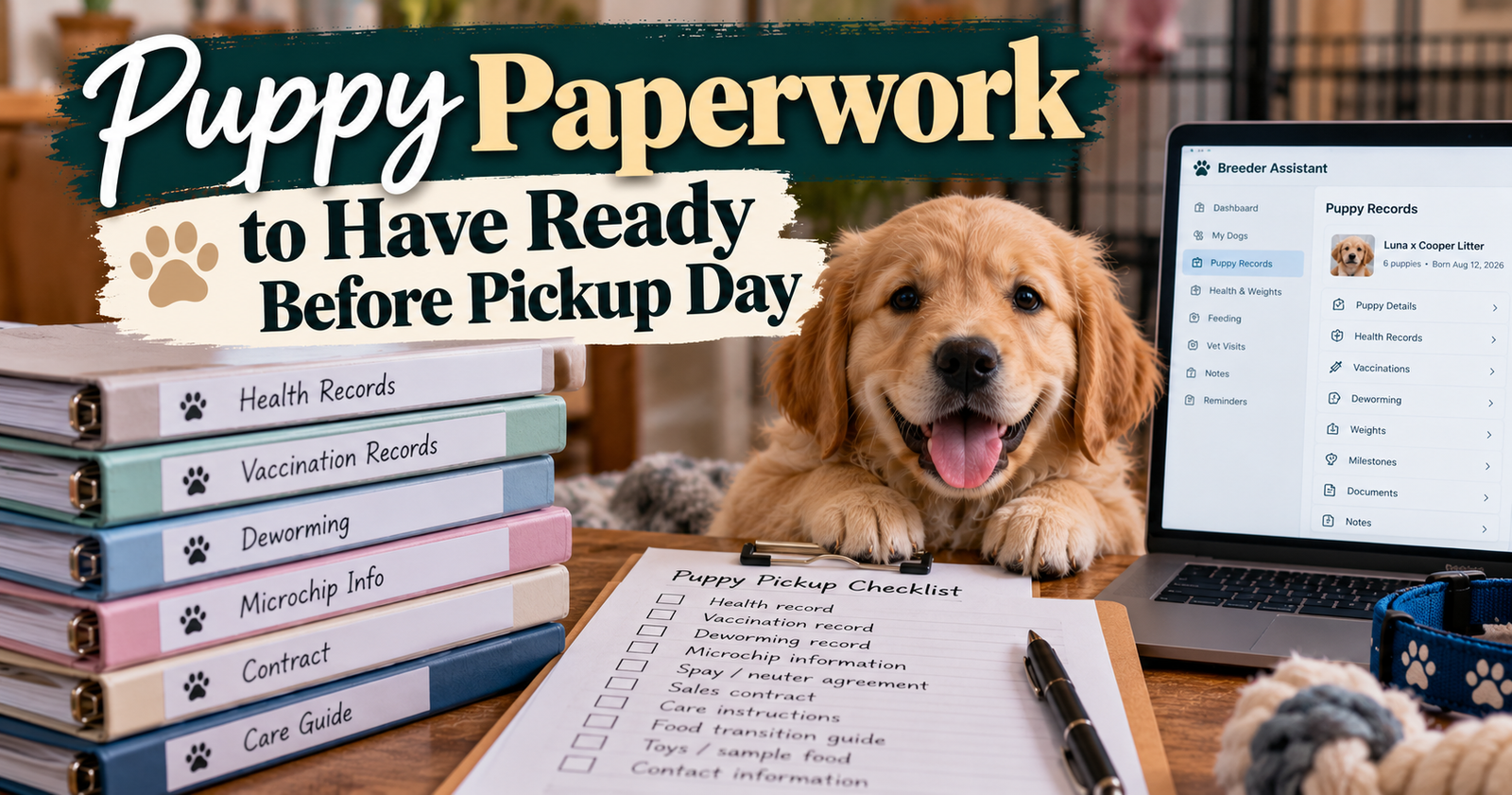
Medication Reminders and Care Reminders Serve Different Needs
This is something I would check before choosing any tracker.
A reminder about an approaching care date is useful.
An alarm needed at a specific medication time serves a different purpose.
Breeder Assistant brings care records, upcoming dates, and configurable email reminders into the wider breeder workspace. For medication that needs precise timing throughout the day, keep appropriate phone alarms or another dependable timing system alongside your records.
Set up the reminders, verify they’re working, and keep a backup for critical medication times.
Our guide to building a breeding calendar around the dates that actually matter explains the broader planning side.
More Than One Person Helping Means Clearer Handoffs
If somebody helps care for your dogs, decide who gives the medication and how completion gets recorded.
“I thought you did it” is an avoidable source of confusion.
A practical handoff should make the dog’s identity, current instructions, last recorded care, and next responsibility clear.
Don’t assume someone saw a note. Make sure they know where to check and who is responsible.
If two people have access to the same information, that still doesn’t replace agreeing on who is doing the task.
Keep Medication Records With the Rest of the Dog’s History
One reason I like keeping care information together is that medication rarely exists all by itself.
There may also be a veterinary visit, a test result, a weight entry, or a follow-up appointment connected to it.
Breeder Assistant organizes those care categories under the dog’s profile. It also gives you places for supporting documents.
That helps when you need to review the sequence of events before calling the clinic.
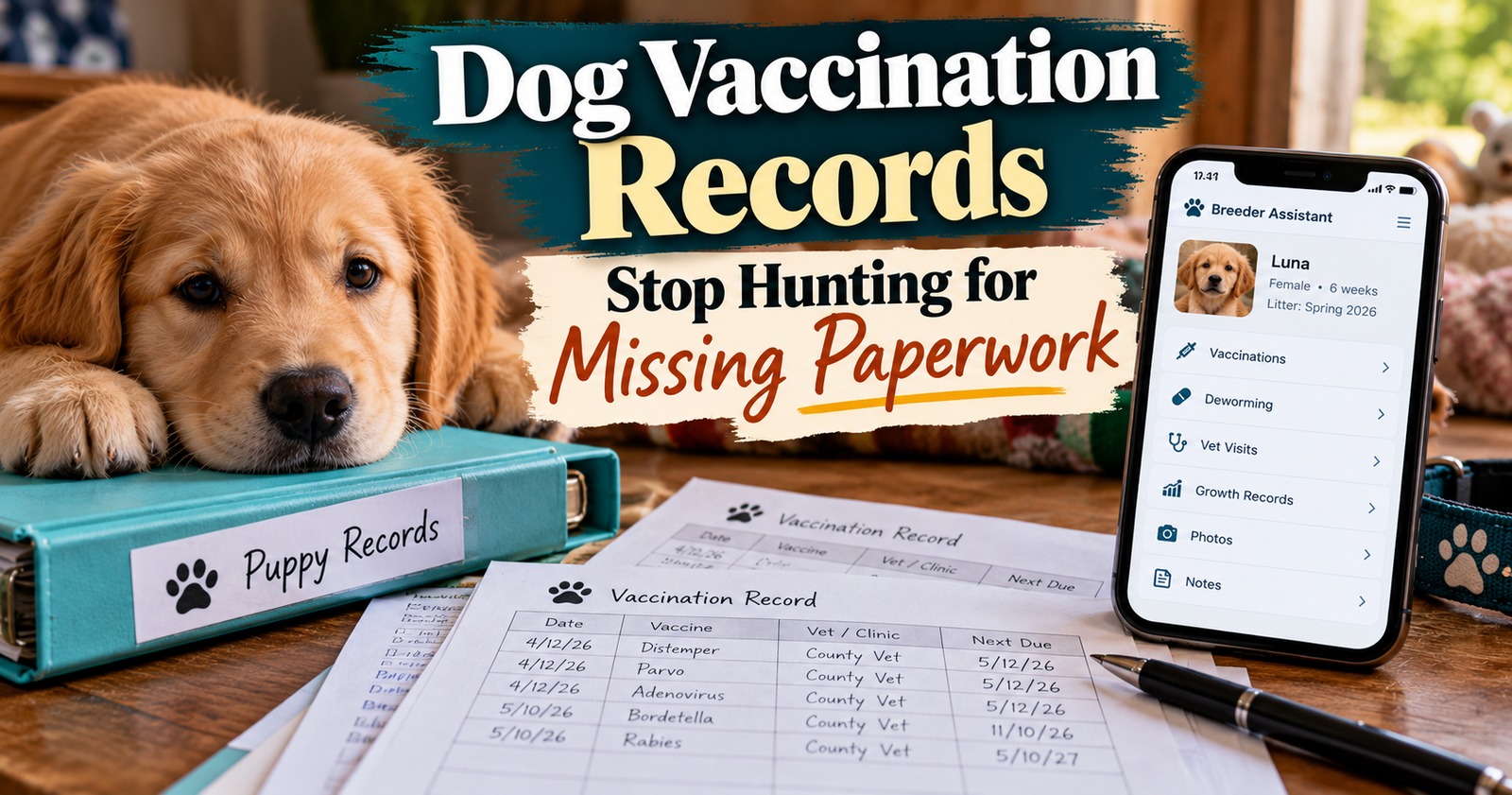
The same approach applies to keeping vaccination dates connected to their original paperwork. A short entry is useful, and the supporting document gives you something to check it against.
Start With the Dogs Receiving Care Right Now
You don’t have to enter years of history before making the system useful.
I would start with a dog currently receiving treatment or approaching a care date.
Add the identifying information first. Then enter the medication details from the current instructions and preserve the relevant paperwork.
Check the entry against the label before moving on.
From there, add the follow-up date and any reminders you need. Build out the older history as time allows.
If that sounds more manageable than maintaining several separate lists, give your kennel’s medication notes and care schedules a shared home in Breeder Assistant.
Questions About Using a Dog Medication Tracker
Can a medication tracker tell me what dose to give?
Use the prescription directions and your veterinarian’s instructions. Breeder Assistant lets you record those directions, but it doesn’t determine whether a medication or amount is appropriate for your dog.
What should I do if I miss a dose?
Follow any missed-dose instructions provided by your veterinarian. If you don’t have them, contact the clinic. The FDA advises that the next step depends on the medication, so there isn’t one rule that fits every prescription.
What if I think my dog received an extra dose?
Contact your veterinarian right away. Have the medication container, strength, possible amount, and approximate time available. Your records can help you explain what happened, but don’t delay the call while trying to perfect them.
Can I track several dogs without mixing up their medication records?
Separate profiles help. Check the dog’s identity before adding an entry, use the medication’s actual name, and review the details before saving. An organized system works best when the information entered into it is accurate.
Written by Breeder Assistant, sharing practical guidance from a licensed dog breeder with many years of experience and 14 dogs total in a small breeding program.