

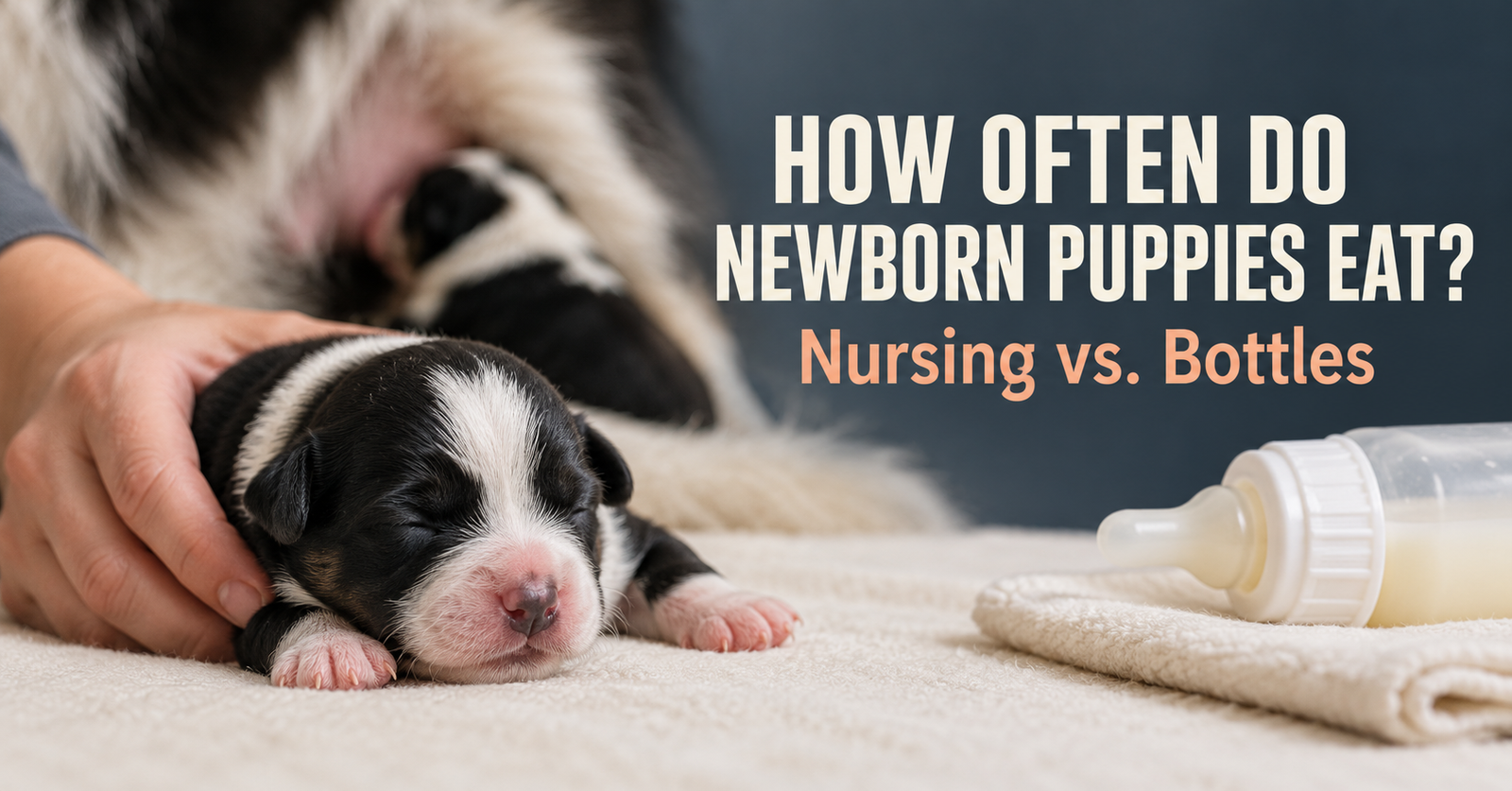
Newborn puppies need to eat often, commonly around every two hours during their earliest days, including overnight. Puppies nursing with their mother usually feed as they need to, while bottle-fed puppies need you to follow a feeding schedule that fits their age, weight, and condition. While you monitor the puppies’ feeding, also make sure you understand what to feed a nursing mother to support milk production.
From my experience as a licensed breeder, two things deserve close attention from the beginning: making sure puppies are eating and keeping them warm the whole time.
Puppies will often cry when they’re hungry or cold. When they’ve eaten, are comfortably warm, and settle down quietly together, that is usually a good sign. It isn’t a guarantee that everything is perfect, but a settled litter tells you something useful.
I have 14 dogs total and many years of breeding experience. My advice is to pay attention to what the puppies are telling you without assuming every sound means an emergency or every quiet puppy is healthy.
How Often Do Newborn Puppies Nurse?
Newborn puppies commonly nurse roughly every two hours, day and night, during their earliest days.
That doesn’t mean every puppy follows an exact schedule. Some nurse, sleep briefly, and come back for more. Others spend longer feeding before settling down.
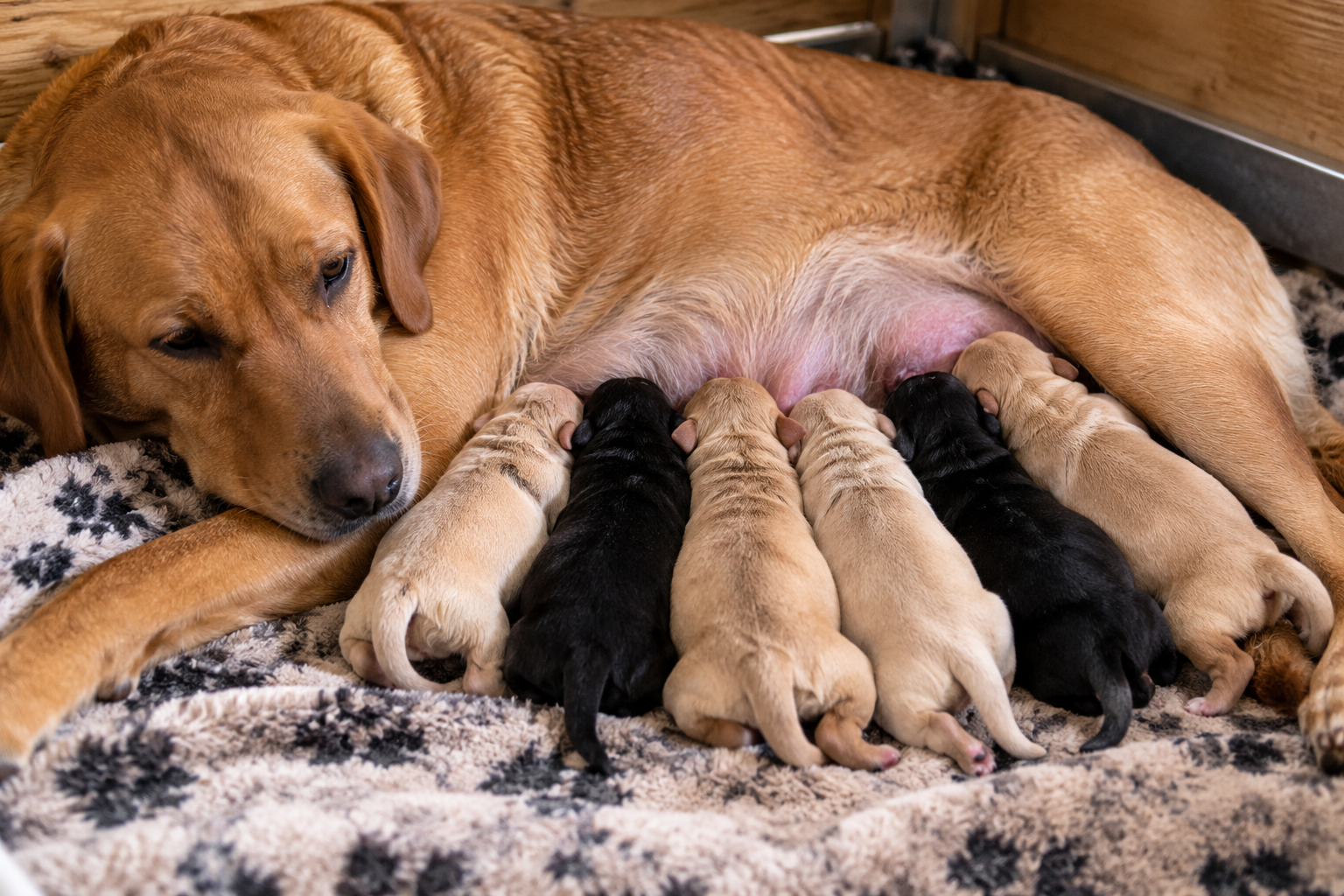
The Royal Kennel Club describes frequent nursing continuing through the first one to two weeks, gradually becoming less frequent as puppies grow. Think of that as a general pattern rather than a timer every litter must follow perfectly.
Let Puppies Nurse When They Need To
If mom is healthy, accepting her puppies, and allowing them to nurse, they generally don’t need you to organize separate mealtimes.
They need access to her, and you need to know that each puppy is successfully feeding.
I wouldn’t pull a nursing puppy away because its feeding time is supposedly over. I also wouldn’t make a hungry puppy wait just because two hours haven’t passed.
Frequent access to milk matters more than making a naturally nursing litter follow a rigid clock.
Check Each Puppy, Not Just the Group
Seeing several puppies underneath mom doesn’t prove they’re all eating.
One may be nursing well while another keeps searching or getting pushed away. Watch for each puppy to attach and suck rhythmically.
For a broader look at those early responsibilities, my newborn puppy first-day guide covers feeding, warmth, safe bedding, and checking on the mother.

Hungry or Cold Puppies Often Cry
This is one of the most useful things to understand when you’re caring for a new litter.
Puppies often cry because they’re hungry, cold, or uncomfortable. If a puppy keeps crying instead of settling down, take a closer look.
Check where it is lying, whether it is warm enough, and whether it has actually nursed.
A puppy separated from the others may need help getting back into a safe position. One that keeps searching around mom may not have found a good place to feed. For guidance on helping a puppy safely without prolonged disruption, see safe handling of newborn puppies.

Quiet, Settled Puppies Are Usually a Good Sign
When puppies are comfortably warm, have fed, and are resting quietly with their mother or littermates, that is generally reassuring.
That is the kind of settled behavior you want to see.
Veterinary guidance also describes warm, content puppies as generally quiet, while restless crying can indicate that something needs attention.
I don’t want first-time breeders worrying that every sleeping puppy needs to be disturbed. Newborn puppies spend much of their time eating and sleeping.
Quiet Doesn’t Always Mean Everything Is Fine
There is a difference between a puppy sleeping comfortably after nursing and a puppy that has become too weak to cry.
A quiet puppy that responds when gently handled, has been nursing, and is progressing appropriately is different from one that is cold, limp, or difficult to wake.
Use quietness as one encouraging sign alongside warmth, feeding, movement, and weight.
If a puppy becomes unusually weak or cannot nurse, don’t let the absence of crying reassure you into waiting.
Staying Warm Is Part of Feeding Care
I put a lot of importance on warmth because newborn puppies can get cold and decline quickly.
It isn’t enough for them to have a warm feeding and then be placed on damp bedding or left somewhere chilly.
They need a consistently appropriate environment between feeds, too.
A chilled puppy may become weak and stop nursing effectively. That makes warmth and feeding closely connected.
Check Conditions Where the Puppies Are Lying
The room may feel comfortable to you while the puppy area is too cool.
Use a thermometer near puppy level and check for drafts, damp bedding, and cold surfaces underneath the box.
VCA recommends an immediate environmental temperature around 85°F to 90°F during the first four days, with conditions adjusted as the puppies develop. That doesn’t mean heating the whole room or every part of the box equally. For safe ways to manage that warmth without overheating the litter, see newborn puppy warmth guidance.

Keep Supplemental Heat Safe
A heat source can help, but it can also burn or overheat puppies if used incorrectly.
Protect puppies from direct contact with hot surfaces. Provide a warmer area and a cooler area, and allow mom to move away from supplemental heat.
Still, don’t assume a newborn can always crawl away before getting too hot. Weak puppies may not move effectively enough to protect themselves.
Don’t Force-Feed a Cold, Weak Puppy
If a puppy is cold, very weak, or barely responding, call your veterinarian immediately.
It needs careful warming and an assessment of what is happening. Forcing milk into its mouth can cause milk to enter its lungs.
Veterinary neonatal guidance recommends correcting hypothermia before feeding. Get instructions for that puppy instead of trying to solve the situation with another bottle.
How Often Do Bottle-Fed Newborn Puppies Eat?
Bottle-fed puppies depend on you for every meal, so they need a more organized schedule than puppies nursing freely with their mother.
About every two hours, including overnight, is a common starting point for the youngest puppies. North Carolina State University’s veterinary hospital gives every-two-hour feeding guidance for one-week-old puppies.
Your veterinarian should help confirm the schedule, amount, and formula for your particular puppies.
Age, weight, health, and how much a puppy can safely take at each feeding all matter.
Overnight Feeding Is Part of the Job
A newborn isn’t ready to skip the night simply because it ate well during the day.
PDSA recommends feeding hand-reared puppies every two hours, including through the night, during their first week. Your veterinarian can tell you when the interval can safely change.
If you’re bottle feeding, plan for the overnight work before everyone is exhausted.
Set alarms, prepare clean equipment, and share care with another responsible adult when possible. Make sure both people know which puppies were fed and when.
Nursing and Bottle Feeding Need Different Kinds of Monitoring
| Feeding situation | What the puppies need | What to watch |
|---|---|---|
| Nursing with mom | Frequent access to her milk | Successful nursing and appropriate growth |
| Completely bottle-fed | A veterinarian-approved feeding schedule | Amount taken, safe technique, warmth, and growth |
| Nursing with supplemental bottles | Support based on the puppy’s needs | Total intake and whether supplementation is helping |
| Cold, weak, or refusing milk | Prompt veterinary assessment | Don’t repeatedly force a feeding |
A puppy receiving milk from mom shouldn’t automatically get the same bottle amount as a completely orphaned puppy.
Supplementing is about meeting a need, not adding extra milk to every puppy just in case.


How Much Milk Should a Bottle-Fed Puppy Get?
There isn’t one bottle amount that works for every newborn.
The correct amount depends on the puppy’s current weight, the milk replacer’s concentration, and whether it is also nursing.
Use a commercial puppy milk replacer and follow your veterinarian’s feeding plan along with the product directions.
Check Whether the Amount Is Per Day or Per Feeding
This is an easy detail to misread when you’re tired.
A label may give a total daily amount that must be divided between feedings. That is very different from giving the entire amount at every meal.
Measure carefully and use the specified mixing ratio. Don’t make formula stronger to help a puppy grow faster or dilute it to stretch the supply. Follow the manufacturer’s preparation and handling instructions.
More Milk Isn’t Always the Answer
A crying puppy may be hungry, but it may also be cold, uncomfortable, or unwell.
If it has already received the appropriate feeding and keeps crying, check the rest of the situation before offering more.
Overfeeding can contribute to regurgitation, bloating, and diarrhea. A swollen belly or repeated feeding trouble needs veterinary advice rather than larger and larger bottles.
Make Sure Puppies Nursing With Mom Are Getting Milk
A puppy can spend time near a nipple without feeding well.
Watch for a secure latch and repeated sucking. Notice whether the puppy keeps slipping off or searching without settling.
After a successful feed, a puppy will often relax and sleep. That settled behavior is encouraging, especially when regular weights also show appropriate progress.
Give the Puppy Being Pushed Aside a Chance
Some puppies get into position more easily than others.
If one keeps losing its place, gently help it reach an available nipple while mom is settled. Then watch whether it actually nurses.
A smaller puppy doesn’t automatically need a bottle. Sometimes it needs better access. Other times, difficulty nursing points to a health concern that needs examination.
Repeated failure to nurse or gain weight is a reason to contact your veterinarian.
Don’t Judge a Feeding Only by Its Length
There isn’t a single nursing-session length that proves a puppy has eaten enough.
A puppy may stay attached without taking in much milk. Another may nurse effectively and settle sooner.
I’d pay more attention to successful nursing, how the puppy behaves afterward, and its weight trend than trying to make every puppy feed for the same number of minutes. These observations are also useful when checking for signs of adequate milk intake.

Weigh Puppies to Back Up What You’re Seeing
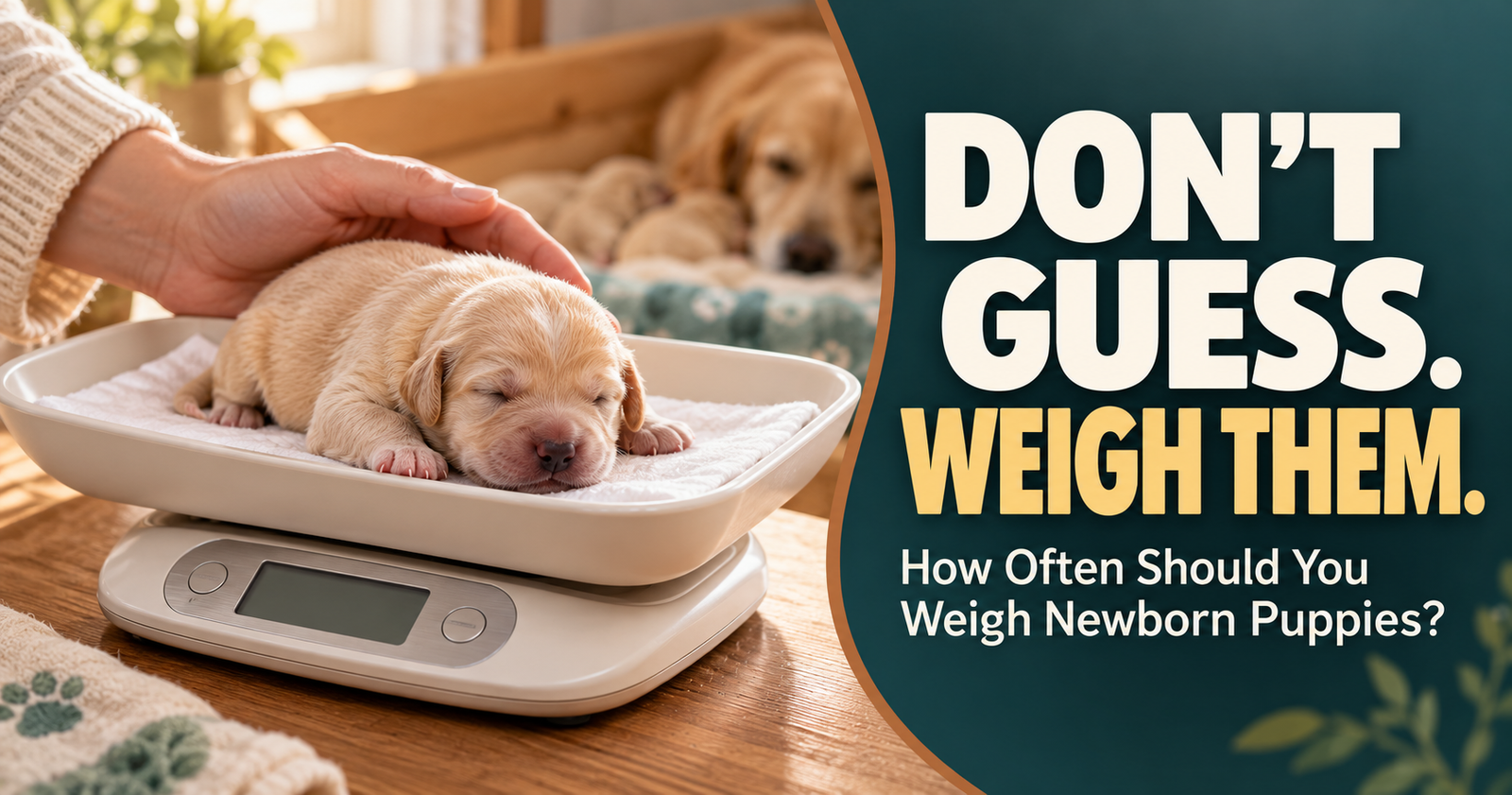
Quiet puppies and successful-looking nursing sessions are reassuring, but a scale gives you another useful piece of information.
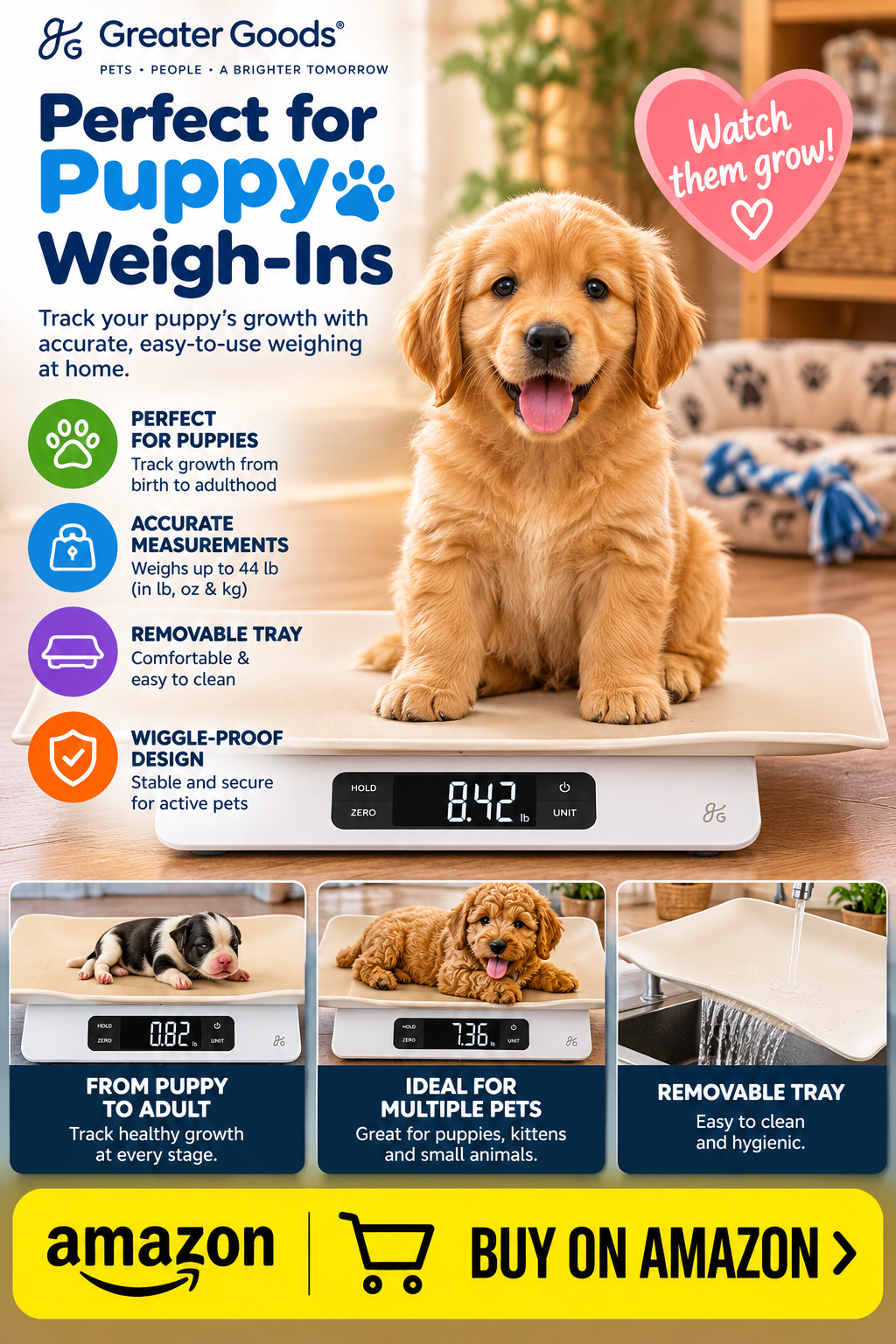
Use an accurate digital scale and record each puppy’s weight consistently.
Merck recommends weighing puppies twice daily during their first week. A puppy needing additional support may need a different monitoring plan from your veterinarian.
Keep Simple Feeding Notes
For puppies nursing with mom, record weights and any trouble feeding.
For bottle-fed puppies, also record the time and amount actually consumed.
If you offered a certain amount but the puppy left some, write down what it took rather than what you prepared.
These notes are especially helpful when more than one person is caring for the litter.
Don’t Wait for Several Bad Weigh-Ins
A puppy that is weak or refusing milk needs attention before you collect days of measurements.
Contact your veterinarian about falling weight, lack of progress, or a change in feeding behavior.
Some puppies can have a small weight decrease during their first day, but that shouldn’t be used to dismiss poor nursing or weakness. Look at the puppy and the weight together.
Use a Safe Bottle-Feeding Position
If bottle feeding is needed, ask your veterinarian to demonstrate the technique.
Support the puppy belly-down, in a position similar to nursing from its mother. Don’t lay it on its back like a human baby.
Let the puppy suck rather than squeezing milk into its mouth.
Stop if Milk Comes From the Nose
Milk coming from the nose, coughing, or breathing changes during a feeding need prompt veterinary attention.
Stop feeding and call for guidance. Don’t keep trying to get the rest of the bottle in.
If a puppy cannot suck effectively, forcing milk faster isn’t a safe solution. Tube feeding requires veterinary instruction and should not be improvised.
Keep Equipment and Formula Clean
Wash your hands and clean bottles and nipples properly.
Follow the milk replacer’s directions for storage, warming, and discarding leftovers. Check expiration dates and don’t use a product with an unexpected smell or texture.

Check Their Resting Space After Feeding
Once puppies have eaten and settled, make sure they are resting somewhere safe.
From my experience, loose fluffy blankets and tight spaces beside mom deserve attention. Puppies can become hidden underneath bedding or pinned against the wall when she lies down.
Keep bedding flat and secure. Account for every puppy after changing bedding or returning one from a bottle feeding.
The warmth and bedding checks in my first-24-hours article explain those risks in more detail.
Newborn Puppy Feeding Questions
Are quiet newborn puppies usually getting enough milk?
Quiet, settled puppies that are warm and have been nursing are usually a good sign. That is reassuring behavior. Still, confirm that each puppy feeds and monitor weights, because a puppy that becomes very weak may also be quiet.
Why does a puppy cry even while it is beside mom?
It may be hungry without successfully latching, too cold, trapped in an uncomfortable position, or experiencing another problem. Check the puppy rather than assuming being next to mom means its needs are met. Persistent crying that doesn’t improve needs veterinary advice.
Should I wake a bottle-fed newborn for scheduled feedings?
Follow the feeding schedule your veterinarian gives you, including overnight feeds. Don’t skip a scheduled meal simply because the puppy is sleeping. A puppy that is unusually difficult to wake or too weak to suck needs prompt veterinary attention.
Do all puppies nursing with mom need extra bottles?
No. Puppies nursing effectively and progressing appropriately may not need supplementation. If one is struggling, have its feeding and health assessed so you can provide the right kind and amount of help.
Does the mother’s first milk matter if I have puppy formula?
Yes. Colostrum supplies protective antibodies as well as nourishment. Ordinary puppy milk replacer doesn’t provide the same maternal antibody protection. If a newborn cannot nurse promptly after birth, contact your veterinarian for guidance.
When can puppies begin eating puppy food?
Many puppies start a gradual introduction to soft puppy food around three to four weeks old while continuing to receive milk. Trying food doesn’t mean they are ready to stop nursing or receiving formula. Weaning should progress with their intake and development.

Written by Breeder Assistant, sharing practical guidance from a licensed dog breeder with many years of experience and 14 dogs total in a small breeding program.